

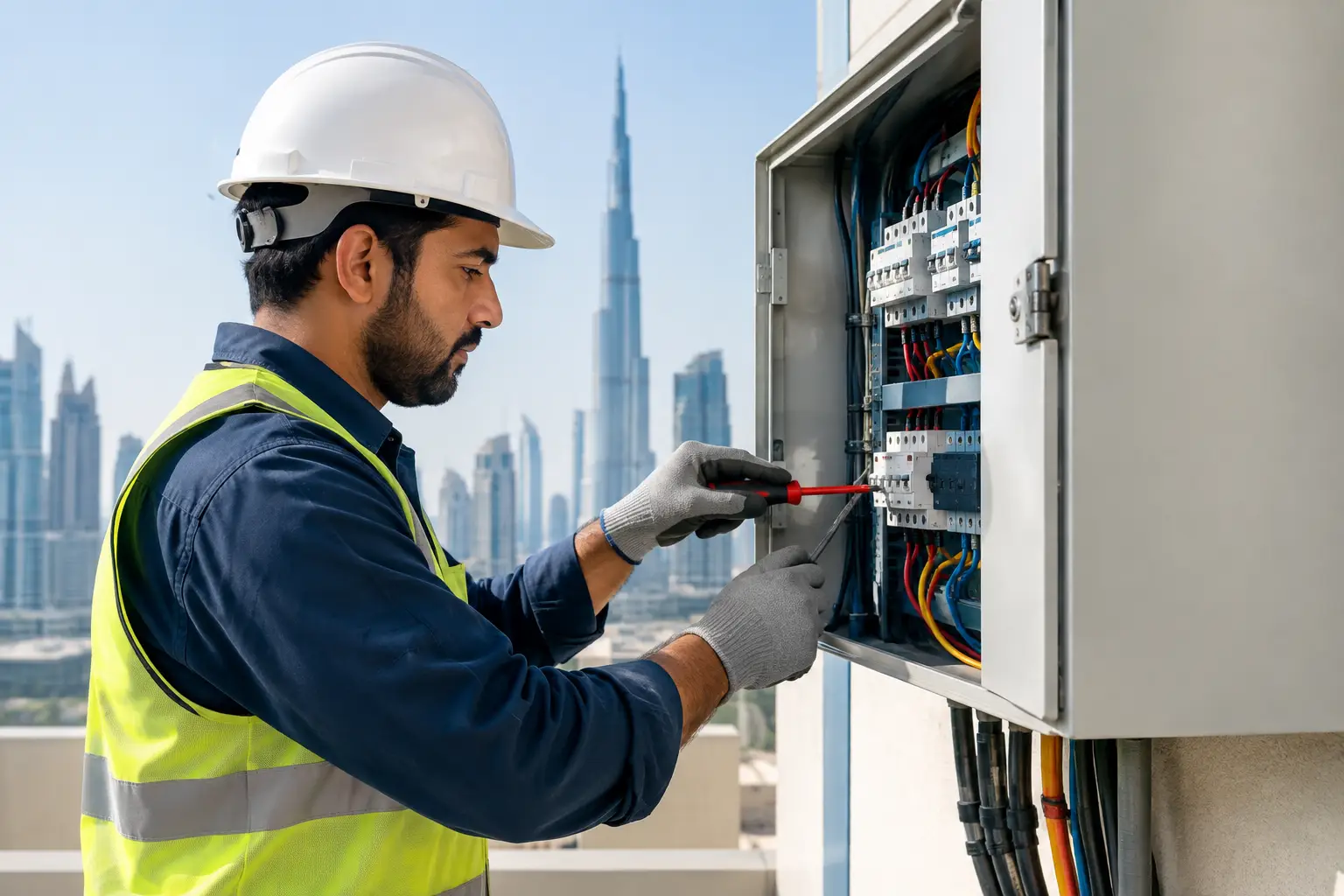
A breaker that trips every few days, lights that flicker when the AC starts, or a warm wall outlet may look like small inconveniences. In a Dubai property, they can also be early warnings of electrical faults that deserve prompt attention. Professional electrical maintenance helps homes, villas, offices, and rental units stay safe, comfortable, and ready for daily use without leaving residents to guess what is happening behind the walls.
Dubai properties often place high demand on their electrical systems. Air conditioners run for long periods, kitchen appliances work hard, water heaters are used year-round, and many homes rely on extension leads, adapters, and chargers. Add heat, humidity, renovation work, or aging components, and minor electrical issues can quickly become disruptive or unsafe.
What Electrical Maintenance Actually Covers
Electrical maintenance is more than replacing a faulty bulb or resetting a circuit breaker. It is a planned inspection and repair process that checks whether the property’s electrical system is operating safely and reliably. The exact scope depends on the property, its age, the number of occupants, and the equipment connected to the system.
A qualified technician may inspect the distribution board, breakers, sockets, switches, light fittings, wiring connections, and visible signs of overheating or damage. They can test circuits, identify loose connections, replace worn accessories, and investigate nuisance tripping. In offices and larger villas, the work may also include checking dedicated circuits for heavy-load equipment, outdoor lighting, water pumps, and kitchen appliances.
The goal is not to replace parts unnecessarily. It is to find weaknesses before they cause a power loss, equipment damage, electric shock risk, or fire hazard. A practical assessment should explain what was found, what needs immediate repair, and what can be monitored or planned for later.
Why Dubai Properties Need Regular Electrical Maintenance
High cooling demand is one of the main reasons electrical systems deserve attention in Dubai. AC units, especially in larger homes and commercial spaces, can draw significant power. If circuits are overloaded, connections are loose, or breakers are not correctly matched to the load, occupants may experience repeated trips or inconsistent performance.
Heat also puts pressure on electrical components. A socket, switch, or cable connection that is already weak can become hotter under sustained use. That does not mean every warm device is dangerous, but a burning smell, discoloration, buzzing sound, sparking, or unusually hot outlet requires immediate professional attention. Do not keep using the outlet to see if the problem goes away.
For landlords and property investors, regular checks can prevent a small tenant complaint from turning into an emergency callout or a costly vacancy repair. For office managers, maintenance helps protect staff comfort, lighting reliability, network equipment, and business operations. Tenants benefit too: reporting early signs of trouble gives the property owner a chance to resolve them before they affect daily life.
Older Units and Renovated Spaces Need Extra Care
Older apartments and villas may have electrical accessories that have worn down over time, particularly in kitchens, bathrooms, balconies, and high-use living areas. Renovated properties need care for a different reason. New fixtures, appliances, partitions, or decorative lighting can add electrical load that was not part of the original setup.
A renovation should never rely on hidden joints, undersized wiring, or overloaded existing circuits to save time. The finished space may look excellent, but safe performance depends on the work behind the walls as much as the fixtures on display. A proper inspection is especially valuable after major fit-out work or before moving into a newly purchased or leased property.
Warning Signs You Should Not Ignore
Some electrical problems are obvious, while others develop quietly. Repeated breaker trips are among the most common signs. A breaker is designed to cut power when it detects a fault or overload, so repeatedly switching it back on without finding the cause is not a solution.
Pay attention if lights dim when a large appliance starts, if switches make crackling noises, or if plugs do not fit securely in an outlet. A persistent burning odor, brown marks around a socket, mild shocks from appliances, or a buzzing distribution board should be treated as urgent concerns. Turn off power to the affected circuit if it is safe to do so, keep people away from the area, and arrange an expert inspection.
Other issues can be less dramatic but still worth checking. A room with too few outlets may lead residents to rely on overloaded power strips. Outdoor lights that fail after rain may have damaged fittings or moisture intrusion. Bathroom and kitchen outlets require appropriate protection because water and electricity are a dangerous combination.
Safe Habits Between Professional Visits
Property occupants can reduce avoidable electrical stress through sensible daily habits. Avoid daisy-chaining extension leads or plugging multiple high-power appliances into one adapter. Appliances such as kettles, microwaves, irons, heaters, and washing machines may need dedicated, properly rated outlets depending on the installation.
Keep sockets and distribution boards accessible. Cabinets, storage boxes, or furniture should not block emergency access, and the electrical panel should be clearly identifiable to household members or office staff. If a circuit trips, note what was running at the time. That detail can help a technician determine whether the issue is overload, a faulty appliance, or a circuit fault.
Do not attempt to repair exposed wires, damaged outlets, or a tripping breaker yourself. Changing a standard light bulb is one thing; work involving wiring, electrical panels, or fault diagnosis is another. The safest choice is to use a skilled technician with the right testing equipment and experience.
Choosing the Right Maintenance Schedule
There is no single schedule that suits every property. A small apartment occupied by one or two people may need a general electrical check less often than a large villa with several AC units, outdoor equipment, domestic staff accommodation, and frequent guests. Offices, retail spaces, and rental portfolios may benefit from more structured inspections because downtime affects more people and equipment.
As a practical approach, schedule an inspection when moving into an older property, after renovation work, when buying a property, or whenever recurring symptoms appear. Landlords can also include electrical checks within an annual maintenance plan, alongside AC servicing, plumbing inspections, and general handyman support. This creates a clearer maintenance record and reduces the need to coordinate multiple contractors for routine issues.
Emergency work and preventive maintenance serve different purposes. Emergency support is essential for an active fault, power loss, burning smell, or damaged electrical fitting. Preventive care is planned around convenience and helps reduce the chance of those urgent situations. Both matter, but a property that only receives attention after something fails will usually cost more to manage over time.
What to Expect From a Professional Visit
A dependable electrical service should begin with listening. The technician should ask when the issue occurs, which appliances are affected, whether the problem is isolated to one room, and whether there have been recent changes such as new appliances or renovation work.
After inspection and testing, you should receive a clear explanation in straightforward language. Good service is not about making a technical problem sound more complicated than it is. It means identifying the fault, explaining the available repair options, and confirming costs before work moves forward where possible.
For busy residents, expatriates, and remote property owners, punctual communication matters just as much as the repair itself. Home Mighty Fixers provides skilled electrical support as part of a wider property maintenance service, making it easier to address electrical concerns alongside AC, plumbing, and general repair needs through one accountable team.
Electrical Maintenance That Protects Comfort and Value
A safe electrical system supports almost every part of a property: cooling, lighting, cooking, internet access, security systems, and everyday appliances. Ignoring warning signs can put that comfort at risk, while planned maintenance gives owners and occupants more control over costs and fewer unpleasant surprises.
If a socket is hot, a breaker keeps tripping, or your property has not had an electrical check since a renovation or move-in, treat that as a useful prompt rather than a problem to postpone. Timely professional attention can keep a small fault from becoming the moment your home or workplace unexpectedly goes dark.
Leave a Reply