

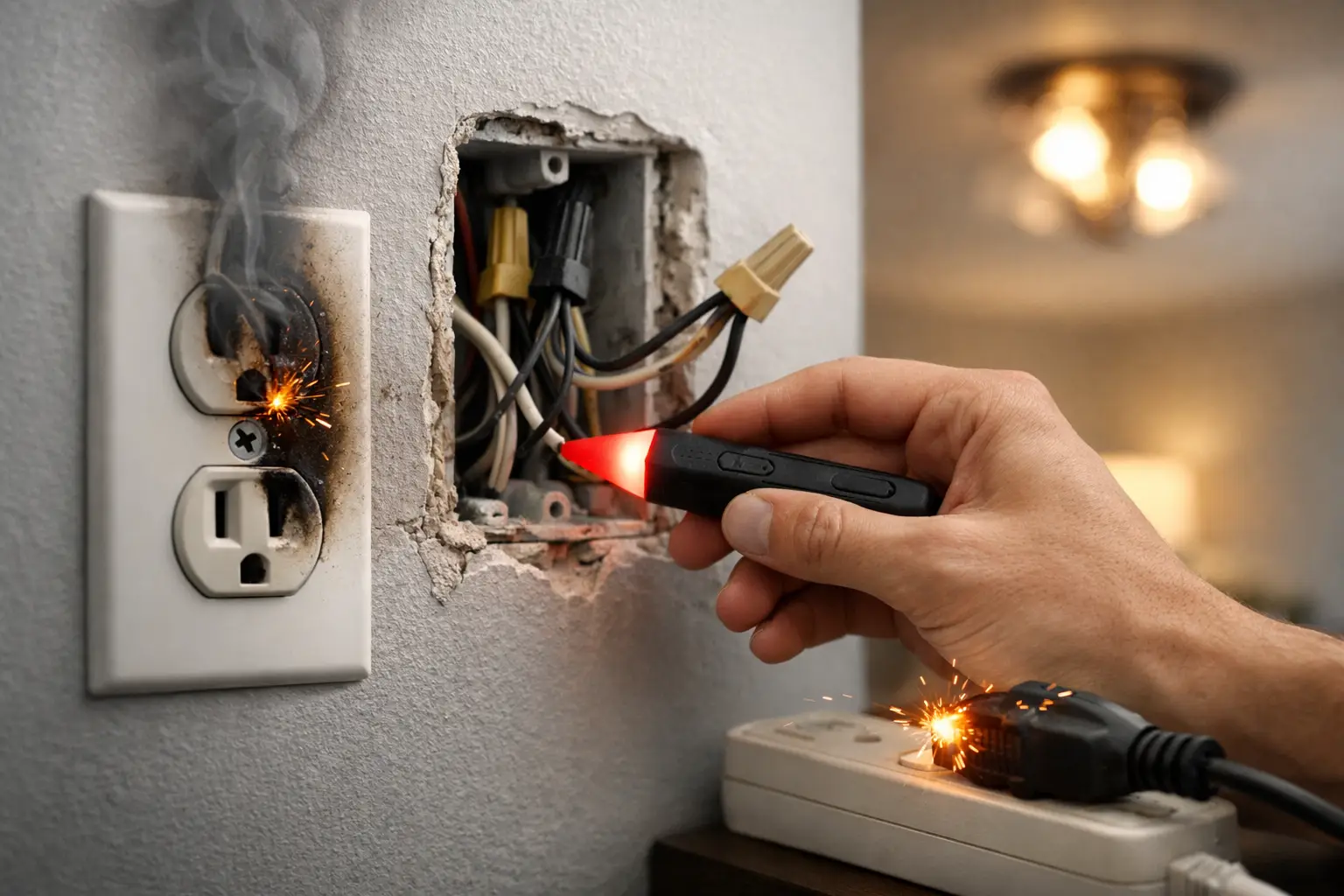
A breaker that trips once after a heavy appliance starts may be a simple overload. A breaker that trips repeatedly, a socket that feels warm, or lights that flicker without explanation are different matters. These are common signs of faulty wiring that should be assessed promptly, especially in Dubai properties where air conditioners, water heaters, kitchen equipment, and office devices can place a high demand on electrical circuits.
Electrical faults are not always dramatic. Many begin as small changes that are easy to dismiss during a busy week: a faint burning smell, a buzzing switch, or one room with unreliable power. Acting early can help protect people, appliances, and the property itself from shock hazards, equipment damage, and electrical fires.
1. Circuit Breakers Keep Tripping
Circuit breakers are designed to switch off power when they detect an overload, short circuit, or ground fault. If a breaker trips after you run too many high-load appliances from one circuit, reducing the load may solve the immediate problem. For example, an iron, kettle, microwave, and portable AC should not all depend on the same outlet circuit.
Repeated tripping is not something to solve by simply resetting the breaker again and again. It can point to damaged wiring, a failing appliance, loose connections, or an undersized circuit. Turn off and unplug nonessential devices from the affected area. If the breaker continues to trip, arrange an inspection by a qualified electrician.
2. Lights Flicker, Dim, or Brighten Unexpectedly
A light that flickers because of a loose bulb is usually straightforward. But multiple lights flickering together, lights dimming when an appliance starts, or bulbs that become unusually bright can indicate a deeper wiring or connection issue.
Fluctuating power may result from loose neutral connections, overloaded circuits, or faults at the distribution board. It can also damage sensitive items such as routers, televisions, computers, and smart home equipment. In a villa or office, note whether the issue affects one room, one floor, or the whole property. That information helps an electrician trace the source safely.
3. Switches or Outlets Feel Warm
Electrical outlets, switches, plug tops, and extension leads should not feel hot during normal use. Mild warmth from some chargers can occur, but heat at the wall outlet, a discolored faceplate, or a hot switch is a warning sign that needs prompt attention.
Heat often develops where wiring connections are loose, corroded, overloaded, or incorrectly installed. It may also mean the outlet is not suitable for the appliance connected to it. Stop using that outlet, unplug equipment only if it is safe to do so, and avoid covering or cooling it with water or cloth. A professional should isolate and repair the fault.
4. You Notice a Burning Smell or Scorch Marks
A burning odor near an outlet, electrical panel, ceiling fixture, or appliance is one of the most urgent signs of faulty wiring. The smell may resemble burning plastic, rubber, or fish. In some cases, you may see brown marks around an outlet or blackening near a switch.
Do not wait to see if the smell disappears. If it is safe, switch off power at the main electrical panel and keep people away from the affected area. If there is smoke, sparking, or visible fire, leave the property and contact emergency services. For a contained electrical concern without fire, urgent electrical inspection is the right next step.
5. Outlets Spark, Buzz, or Give Small Shocks
A tiny, brief spark when plugging in an appliance can occasionally occur, particularly with devices that draw power immediately. It should not be frequent, large, noisy, or accompanied by a burning smell. Persistent sparking, crackling sounds, buzzing, or a shock when touching an appliance or switch should always be treated seriously.
These symptoms may be linked to worn outlets, damaged cords, loose wires, poor grounding, moisture exposure, or incorrect connections. Bathrooms, kitchens, laundry areas, and outdoor spaces deserve extra attention because water increases the risk of electric shock. Never continue using a socket that shocks, crackles, or shows damage.
6. You Rely on Extension Cords and Power Strips Every Day
Extension cords can be useful temporarily, but they are not a permanent answer to too few outlets. A room that depends on chained power strips or long extension leads may have an electrical setup that no longer matches how the space is used.
This is common in home offices, renovated rooms, staff workstations, and rental units where extra devices have been added over time. Overloaded extensions can overheat, while cords hidden under rugs or behind furniture may become damaged without anyone noticing. Installing properly rated outlets or dedicated circuits is generally safer and more practical than adding more adapters.
7. Appliances Lose Power or Perform Poorly
If an appliance repeatedly shuts down, runs inconsistently, or appears weaker than normal, the appliance itself may be at fault. However, the electrical supply also needs to be checked. This is particularly relevant for high-demand equipment such as AC units, water pumps, ovens, washing machines, and commercial kitchen appliances.
Low or unstable voltage, poor connections, and overloaded circuits can affect performance and shorten equipment life. An AC that trips its breaker should not be repeatedly restarted, since the cause could be electrical, mechanical, or both. A coordinated inspection can determine whether the issue sits with the appliance, its dedicated circuit, or the main distribution system.
8. The Electrical Panel Shows Damage or Unusual Behavior
Your distribution board should remain closed, dry, accessible, and free from unusual noise or odor. Warning signs include a buzzing panel, heat around breakers, rust or moisture, breakers that will not stay on, damaged labels, or visible signs of burning.
Older panels and poorly documented modifications can make future repairs more difficult and less safe. For landlords and property managers, clear circuit labeling is especially valuable. It allows residents and maintenance teams to isolate the right area quickly during an issue without shutting down unnecessary parts of the property.
Do not remove the panel cover or touch internal components to investigate. Electrical panels contain live parts even when individual breakers are off. A qualified electrician can test circuits, tighten approved connections, identify overloaded lines, and recommend repairs or upgrades based on the property’s actual load.
9. Rodent Damage, Water Leaks, or Recent Renovation Has Affected Wiring
Wiring can be damaged without obvious electrical symptoms at first. Rodents may chew cable insulation in ceiling voids or storage areas. Plumbing leaks can expose outlets, junction boxes, or concealed wiring to moisture. Drilling, wall mounting, and renovation work can also accidentally strike cables.
After a leak, do not assume the electrical system is safe just because the wall has dried. Water can corrode connections and create faults later. Similarly, if work has been done near switches, outlets, or ceiling lights and new electrical problems appear afterward, ask for the circuit to be inspected rather than accepting unreliable power as normal.
10. The Property Has Old, Altered, or Poorly Maintained Electrical Work
Age alone does not prove wiring is unsafe, but older properties may have circuits designed for far fewer appliances than modern households and offices use. Frequent additions, informal repairs, mismatched outlets, loose faceplates, and unexplained wires are all reasons to request a professional assessment.
This is particularly sensible before moving into a rental property, purchasing a villa, opening an office, or beginning a renovation. An electrical inspection can identify load concerns, damaged accessories, inadequate grounding, and circuits that need attention before they become disruptive or dangerous.
What to Do When You Suspect an Electrical Fault
Start with caution, not troubleshooting. Stop using the affected outlet or appliance, keep children and pets away, and switch off the relevant breaker if you can identify it safely. Never touch exposed wires, attempt a repair inside an outlet, or use water near an electrical fault.
For an active hazard such as smoke, flames, strong burning odor, or sparking, evacuate and contact emergency services immediately. For non-fire concerns, book a qualified electrician as soon as possible. A proper visit should involve testing the circuit, identifying the underlying cause, explaining the repair needed, and restoring the area safely rather than applying a temporary fix.
Home Mighty Fixers can help Dubai homeowners, tenants, landlords, and office managers with dependable electrical maintenance and urgent fault checks. Prompt, skilled attention gives you a clearer answer than repeated breaker resets and helps keep your property comfortable, functional, and protected.
A quiet electrical system is easy to take for granted. When it starts sending small warnings, treating them early is one of the simplest ways to avoid a far more serious problem later.
Leave a Reply