

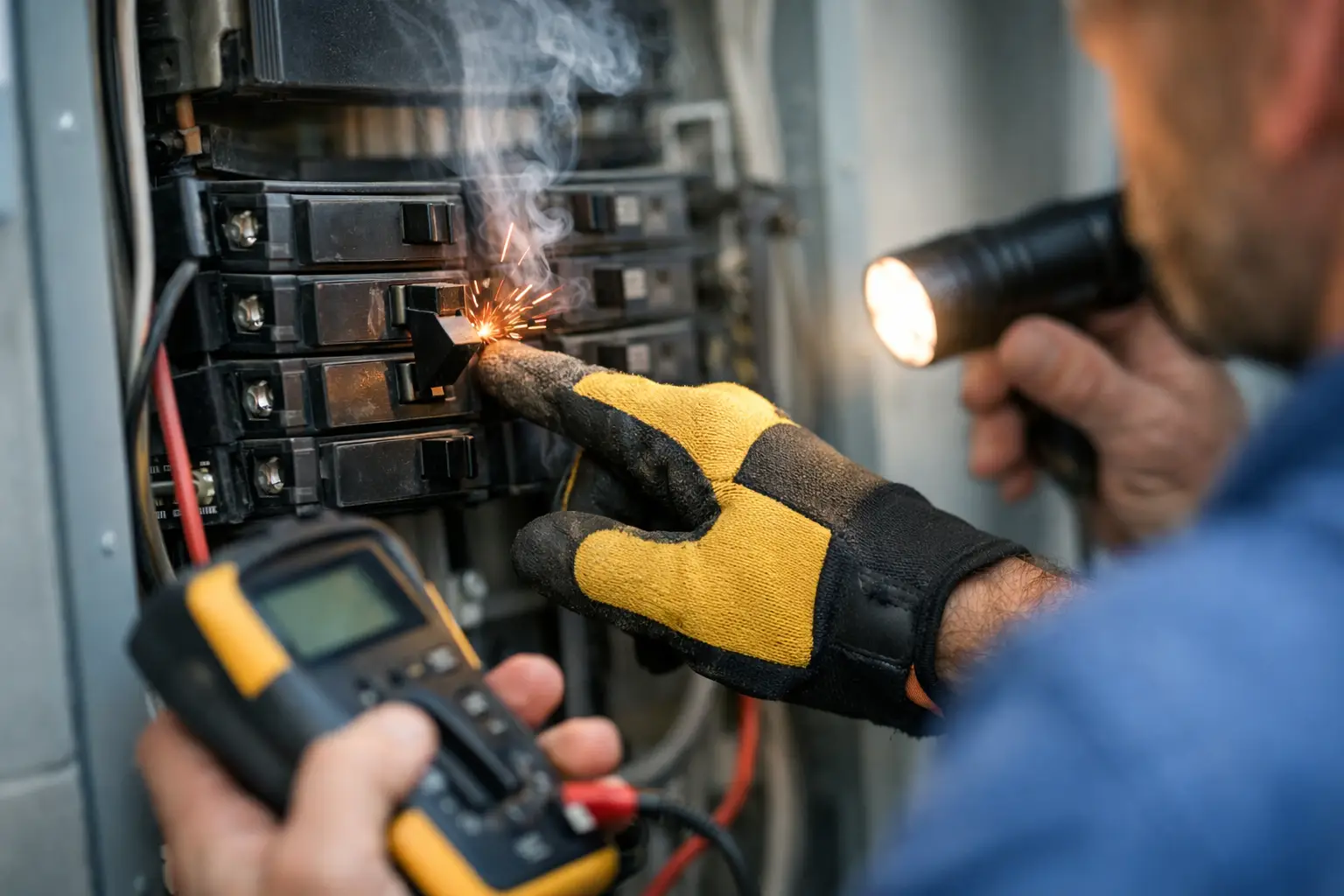
A circuit breaker tripping once while several high-power appliances are running may be a simple overload. If it keeps happening, trips immediately after being reset, or affects essential equipment, treat it as a safety warning rather than an inconvenience. In Dubai homes and offices, where AC systems, water heaters, pumps, and kitchen appliances can place heavy demand on electrical circuits, finding the cause promptly protects people, equipment, and property.
What Circuit Breaker Tripping Is Telling You
A circuit breaker is designed to stop electricity flowing when it detects a condition that could overheat wires, damage equipment, or create an electric shock or fire risk. It is not a fault in itself. It is a protective device doing its job.
Most properties have breakers assigned to different circuits, such as lighting, wall outlets, kitchen equipment, AC units, or water heaters. When one breaker trips, the affected area loses power while the rest of the property may continue operating normally. This separation helps narrow down where the fault may be.
The reason matters. An overloaded circuit can often be addressed by reducing the load or redistributing appliances. A short circuit, damaged cable, moisture intrusion, or failing appliance requires professional attention. Repeatedly pushing the breaker back on without identifying the issue can turn a manageable repair into a larger electrical problem.
The Most Common Causes of a Tripped Breaker
Too many appliances on one circuit
Overloading occurs when a circuit is asked to supply more power than it is rated to handle. In practical terms, this can happen when an electric kettle, microwave, toaster, and other kitchen equipment operate at the same time. In bedrooms and living areas, portable heaters, ironing equipment, extension leads, and multiple chargers can create the same issue.
Dubai villas and apartments may also experience overloads when a new appliance is added to an existing circuit that was not designed for it. A high-capacity water heater, dishwasher, dryer, or additional AC unit should be assessed before installation, especially in older properties or units that have been modified over time.
A faulty appliance
An appliance with a damaged cord, internal wiring fault, failing heating element, or moisture exposure can trip a breaker as soon as it is switched on. This is common with kettles, irons, washing machines, ovens, water heaters, and outdoor equipment.
If the breaker remains on until one specific appliance is plugged in or turned on, stop using that appliance. Unplugging it does not make it safe to repair yourself. An electrical technician can test whether the problem is in the appliance, outlet, circuit, or connected equipment.
A short circuit or damaged wiring
A short circuit happens when electricity takes an unintended path, often because insulation has deteriorated or a wire has become loose or damaged. This can cause a breaker to trip immediately and may be accompanied by a burning smell, buzzing, discoloration around an outlet, or a warm switch plate.
Wiring faults should never be ignored, particularly after drilling into a wall, pest damage, water leakage, renovation work, or a power surge. Do not remove outlet covers or open the electrical panel to investigate. The visible symptom may be small, while the fault sits inside a wall, ceiling, junction box, or appliance connection.
Moisture near electrical components
Water and electricity are a serious combination. A plumbing leak under a sink, condensation from AC pipework, a bathroom leak, or rain entering an outdoor fitting can trigger a protective device. This is particularly relevant for outdoor lights, garden pumps, water heaters, and sockets located near kitchens, bathrooms, balconies, and utility areas.
If you see water near an outlet, electrical panel, appliance connection, or extension cord, keep clear of the area. Do not touch the equipment or attempt to dry it while power is still connected. Shut off power only if it can be done safely from a dry location, then arrange urgent professional help.
An AC, water heater, or pump fault
In Dubai, persistent breaker trips are often linked to high-use building systems. An AC unit can trip its circuit because of a failed capacitor, compressor problem, damaged wiring, blocked airflow that causes overheating, or an incorrect electrical connection. A water heater may trip due to a faulty heating element or thermostat. Pumps can develop motor or insulation faults, especially where moisture is present.
These systems should be tested as complete units. Resetting the breaker may briefly restore operation, but it does not correct the underlying issue. Continuing to run faulty equipment can cause more expensive damage and leave you without cooling, hot water, or water pressure when you need it most.
What You Can Check Safely Before Calling for Help
Start by turning off or unplugging appliances in the area affected by the tripped breaker. At the electrical panel, look for a breaker that has moved to the off position or sits between on and off. Do not touch exposed wiring, and make sure your hands and the floor are dry.
Move the breaker fully to off first, then switch it back on once. If it stays on, reconnect appliances one at a time. Give each appliance a moment before adding the next. If the breaker trips after a particular item is connected, leave that item unplugged and arrange an inspection.
If the breaker trips again with everything unplugged, or it trips immediately when reset, stop there. The problem is more likely to be in the circuit wiring, outlet, fixed appliance, or electrical panel. This is not a situation for repeated testing.
It also helps to note what was happening when the power went out. Was the AC running? Had a water heater, washing machine, or kitchen appliance just been turned on? Did it happen after heavy rain, cleaning, a leak, or recent maintenance work? These details allow an electrician to diagnose the issue faster and reduce unnecessary disruption.
When Circuit Breaker Tripping Needs Emergency Attention
Some warning signs call for immediate action. Turn off the power if safe to do so, keep people away from the affected area, and request urgent electrical assistance if you notice any of the following:
- A burning odor, smoke, sparks, buzzing, or crackling from an outlet, switch, appliance, or panel
- An electrical panel that feels hot, shows scorch marks, or has repeatedly tripping breakers
- Water near electrical equipment or power loss following a visible leak
- A breaker that will not reset, trips instantly, or leaves critical systems unsafe
- Tingling, shocks, or flickering lights when using an outlet or appliance
Do not use extension cords as a permanent workaround for a circuit that cannot handle the load. They can conceal the real problem while adding heat and trip hazards. Likewise, never replace a breaker with a larger rating simply to stop trips. Circuit protection must match the cable size, installation method, and electrical load, which requires a qualified assessment.
Preventing Future Electrical Interruptions
Prevention begins with using circuits as they were intended. High-load appliances should have suitable dedicated circuits where required, and extension leads should be used sparingly and never overloaded. If your property has frequent electrical additions, such as new appliances, upgraded kitchen equipment, extra AC units, or office workstations, an electrical load review is worthwhile.
Regular property maintenance also helps prevent hidden causes. AC servicing can identify damaged connections and components before they affect electrical performance. Plumbing repairs can prevent moisture from reaching outlets and equipment. For landlords and office managers, planned inspections are especially useful between tenancies, after renovations, and before periods of heavy AC use.
Home Mighty Fixers can inspect recurring electrical faults, test affected circuits and appliances, and coordinate related AC, plumbing, or handyman repairs when more than one issue is involved. Clear diagnosis and transparent repair recommendations are safer than temporary fixes that leave your home or workplace exposed to another unexpected outage.
A breaker that trips is asking for attention. Responding early, using only safe basic checks, and bringing in a skilled technician when the cause is unclear will help keep your property comfortable, functional, and protected.
Leave a Reply