

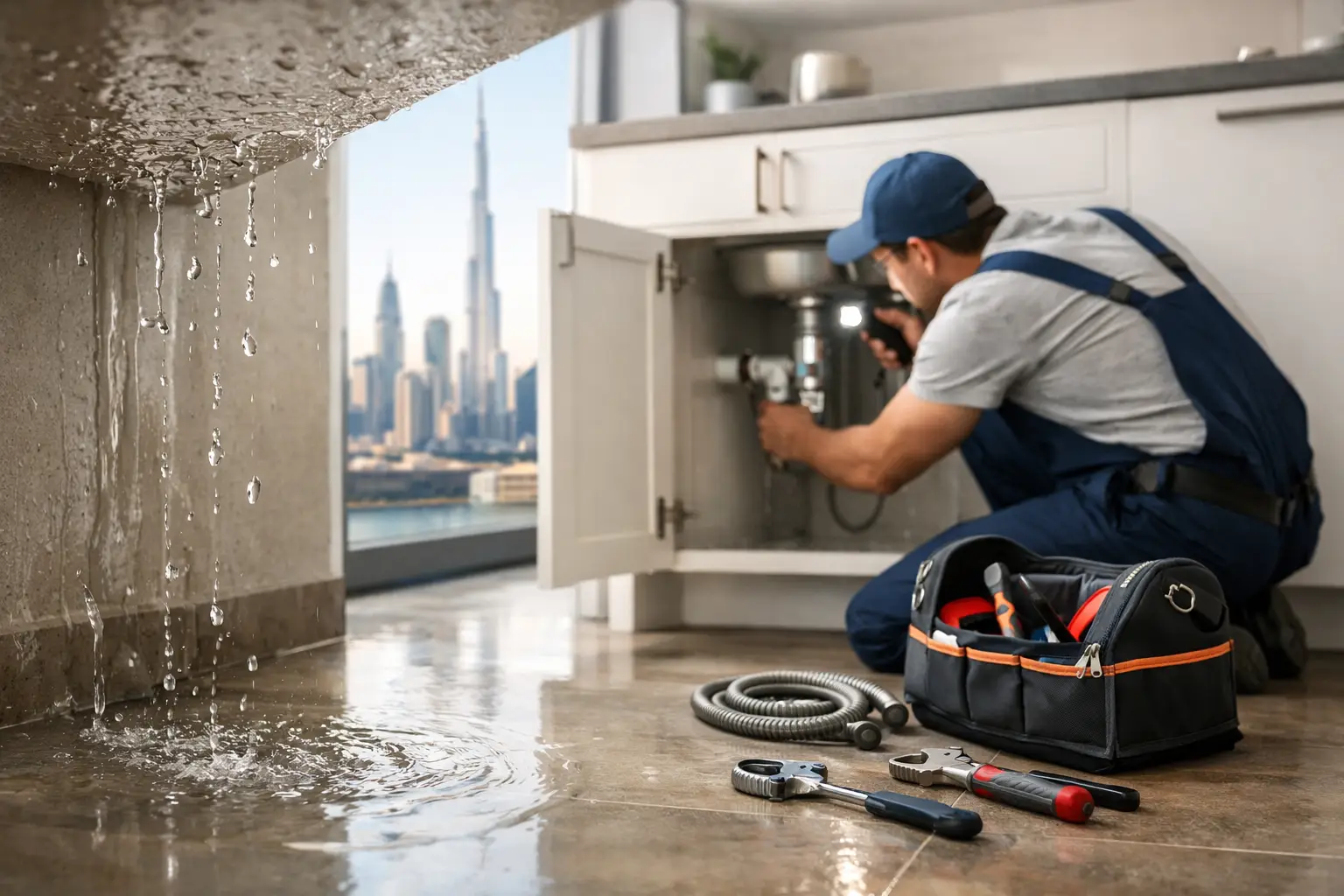
A small wet patch beneath a kitchen sink can become a damaged cabinet, swollen flooring, mold growth, and an unexpected water bill faster than most Dubai residents expect. Water leak repair Dubai homeowners, tenants, landlords, and office managers need is not just about stopping visible drips. It is about finding the source, protecting the property, and making sure the same problem does not return behind a wall or under a floor.
Dubai properties place particular pressure on plumbing systems. High water use, hard water deposits, aging seals, concealed pipework, AC condensate lines, and vacant units can all turn a minor issue into a larger repair. Acting early is usually the most affordable option.
When a Water Leak Needs Immediate Attention
Some leaks are obvious: a burst flexible hose, water flowing from a ceiling, or a toilet that will not stop filling. Others are quiet and can cause more damage because they remain hidden. A prompt inspection is wise if you notice a recurring musty smell, peeling paint, dark ceiling marks, warped skirting boards, damp grout, reduced water pressure, or a water meter that continues moving when every tap and appliance is off.
Water coming through a ceiling requires fast action, especially in apartments. The source may be an upstairs bathroom, a leaking drain line, a failed waterproofing layer, or an AC drainage issue. Do not assume the stain identifies the exact location of the leak. Water can travel along pipes, concrete, or ceiling voids before appearing elsewhere.
If water is close to outlets, electrical equipment, or a distribution board, keep clear of the area and avoid touching wet switches. Turn off the water supply only if it is safe to do so, then arrange professional help. Electrical safety always comes before protecting furniture or finishes.
First Steps Before Water Leak Repair in Dubai
A calm response can limit damage while a technician is on the way. First, close the nearest isolation valve if you know which fixture is leaking. Sinks, toilets, washing machines, and water heaters often have local shutoff valves. If the source is unclear or water continues to spread, close the main water valve for the property.
Move rugs, documents, electronics, and loose furniture away from the affected area. Use towels or a container to control standing water, but do not pull apart cabinets, tiles, or ceilings to investigate. That can worsen damage, conceal the original cause, and create issues with building management or insurance documentation.
Take clear photos and short videos before cleaning up where possible. For tenants, notify the landlord or property manager promptly. For apartment owners, contact building management when the leak may involve common pipes, another unit, or shared shafts. Fast communication matters because responsibility can depend on where the failure occurred.
Common Causes of Plumbing Leaks in Dubai Properties
The correct repair depends on the cause, not simply on the place where water becomes visible. A skilled technician should inspect the affected area, trace the line involved, and explain what has failed before recommending work.
Worn Flexible Hoses and Fixture Connections
Flexible hoses beneath sinks, behind toilets, and at washing machines are common weak points. Their fittings and rubber components can deteriorate over time, particularly where moisture, heat, or corrosion is present. These leaks may begin as a slow drip and go unnoticed inside a closed vanity cabinet.
Replacing a failed hose is often straightforward, but the surrounding cabinet, wall finish, and shutoff valve should also be checked. A new hose connected to a weak valve or corroded fitting may only postpone the next problem.
Leaking Faucets, Toilets, and Water Heaters
A dripping faucet can waste a surprising amount of water over weeks. In toilets, a worn fill valve or flush seal may cause continuous refilling without leaving water on the floor. Water heaters can leak from relief valves, connections, internal tanks, or nearby pipework. Because hot-water systems operate under pressure, they should be assessed carefully rather than patched temporarily.
Concealed Pipe Leaks
Leaks inside walls, ceilings, and floors often show up as stains, bubbling paint, dampness, or an unexplained rise in water consumption. Breaking tiles immediately is not always the right first move. Leak detection methods can help narrow down the likely source and reduce unnecessary demolition. The final repair may still require access to the pipe, but targeted work usually means less disruption and a cleaner restoration.
AC Condensate and Drainage Problems
Not every water mark is a plumbing leak. Dubai air conditioning systems create condensate, which must drain correctly. A blocked drain line, overflowing drain pan, poor insulation, or damaged condensate pump can cause ceiling stains and dripping near indoor units. This is why multi-trade assessment matters: treating an AC drainage problem as a pipe leak can waste time, while ignoring it can lead to repeated damage.
Bathroom Waterproofing Failures
If a bathroom leaks into the room below only when the shower is used, failed grout, sealant, tile joints, floor slope, or waterproofing may be involved. Surface resealing can help in limited cases, but it will not solve damaged waterproofing beneath the tile. The right solution depends on the test results and the condition of the bathroom, not on a one-size-fits-all repair.
What Professional Water Leak Repair Dubai Service Should Include
Reliable repair begins with diagnosis. A technician should inspect visible plumbing connections, test fixtures, assess pressure where relevant, and identify whether the issue comes from a supply line, drain line, appliance, AC system, or waterproofing failure. For concealed leaks, the technician should explain the evidence behind the recommended access point.
The repair itself may involve replacing a hose, valve, pipe section, trap, seal, or damaged fitting. It may also require drain cleaning, leak detection, AC drain servicing, or more extensive bathroom remedial work. Good service is not measured by how quickly someone applies sealant. It is measured by whether the water source is corrected and the repair is tested before the technician leaves.
Ask for clear pricing before work begins, including whether diagnosis, materials, access work, and restoration are included. The lowest quoted callout can become expensive if it excludes essential parts or follow-up testing. At the same time, a major replacement is not always necessary for a minor connection leak. An honest assessment should distinguish between an urgent repair, a sensible preventive replacement, and optional improvement work.
Home Mighty Fixers provides practical support across plumbing, AC, electrical, and general property maintenance, which is useful when the source of water damage is not immediately clear. One accountable team can help reduce the back-and-forth between separate contractors while keeping the work organized.
Preventing Repeat Leaks at Home or Work
Leak prevention is less about constant worry and more about routine checks. Look under sinks and around toilets every few months, particularly in guest bathrooms and rarely used rooms. Check washing machine hoses, water heater connections, and cabinets for dampness, rust, or discoloration. If you travel frequently or manage a vacant rental, arrange periodic inspections rather than leaving the property unmonitored for months.
For villas, irrigation lines, outdoor taps, pump rooms, and water tanks also deserve attention. A leak outside may seem less urgent, but it can affect landscaping, increase consumption, undermine paving, or create dampness near the structure. For offices, inspect pantry plumbing, washrooms, AC drainage, and utility rooms before small issues interrupt operations.
Annual maintenance plans can be a practical choice for landlords, busy families, and property managers with multiple maintenance needs. They do not eliminate every emergency, but regular inspections make it easier to spot worn components before they fail. Whether an AMC is worthwhile depends on the age of the property, the number of fixtures, occupancy patterns, and how much support you need managing repairs.
A Quick Note for Tenants and Landlords
Tenants should report leaks early, even when they appear minor. Waiting to see whether a stain dries can increase damage and complicate responsibility later. Landlords should keep records of repairs and schedule preventive checks between tenancies, when concealed issues are easier to identify without disrupting occupants.
If a leak affects neighboring units, document the issue, cooperate with building management, and avoid arranging invasive work without the required approvals. Fast repairs are essential, but clear coordination protects everyone involved.
A water leak rarely arrives at a convenient time. The best response is simple: stop the water if it is safe, protect the area, report the issue quickly, and choose a technician who investigates the cause rather than treating the visible symptom. That approach keeps your home or workplace cleaner, safer, and far easier to manage.
Leave a Reply