

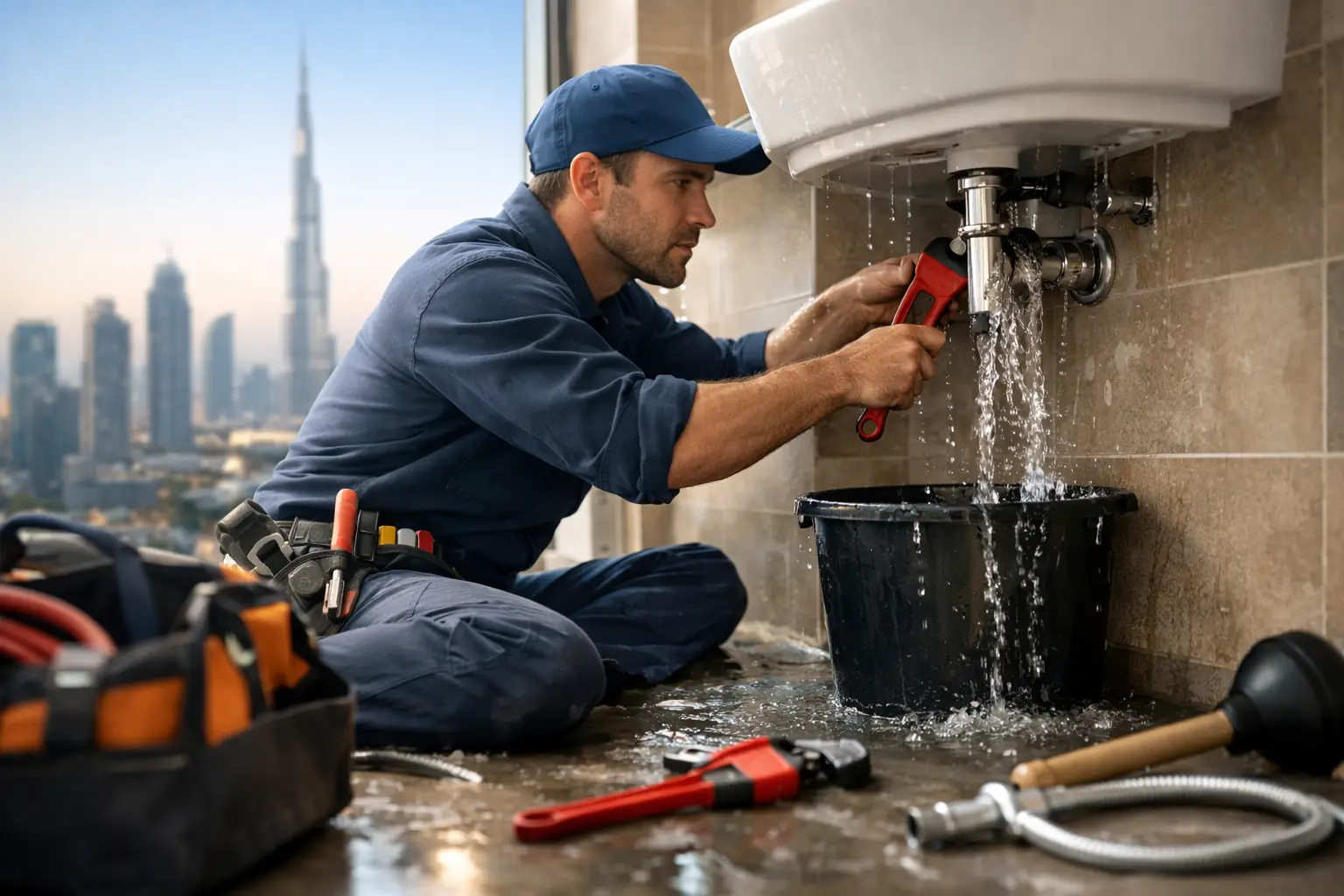
A burst pipe behind a bathroom wall, sewage backing up through a floor drain, or water spreading across an apartment kitchen can become expensive within minutes. Calling an emergency plumber in Dubai quickly is the right move, but the first actions you take can reduce damage to flooring, furniture, electrical systems, and neighboring properties.
Dubai homes and workplaces often rely on pressurized water systems, concealed pipework, booster pumps, and AC condensate drains. When one of these systems fails, a small warning sign can turn into a disruptive property emergency. The goal is not to attempt a complicated repair yourself. It is to make the area safe, contain the water where possible, and get a qualified technician on site.
What Counts as a Plumbing Emergency?
Not every dripping faucet requires an urgent nighttime callout. A slow tap leak can usually be isolated and scheduled for repair during regular hours. An emergency is a plumbing fault that threatens safety, hygiene, building materials, business operations, or another unit in the building.
Water gushing from a pipe, a toilet that overflows and will not stop, a blocked main drain causing wastewater to return indoors, or a water heater leak near electrical connections all require immediate attention. So does a sudden loss of water pressure throughout a villa or office, particularly if it points to a major hidden leak or a pump issue.
In Dubai apartments, it is also wise to treat a leak that may affect a lower-floor neighbor as urgent. Water can travel beneath tiles and through ceiling voids before visible staining appears. Waiting until morning can create a larger repair bill and an avoidable dispute with building management.
First Steps Before an Emergency Plumber Arrives
Your priority is safety, followed by limiting the spread of water. Do not remove access panels, break tiles, or use tools on pressurized pipes if you are unsure of the system. A temporary mistake can increase the leak or create an electrical hazard.
Start by turning off the nearest isolation valve if you know where it is and can reach it safely. For a leaking toilet, the small valve behind or beside the fixture may stop the flow. For a leaking sink, look inside the cabinet below it. If the leak is significant or the local valve does not work, turn off the property’s main water supply. In apartments, this may be in a utility cupboard, kitchen cabinet, service shaft, or meter area. Villas may have it near the external water meter, pump room, or water tank connection.
If water is close to outlets, extension cords, appliances, or an electrical panel, do not step through it. Switch off electricity to the affected area only if you can do so without approaching standing water. Keep children and pets away, and avoid using electrical appliances in the room.
Move rugs, loose furniture, documents, and valuables away from the wet area. Use towels, buckets, or a mop to contain clean-water leaks where it is safe to do so. For sewage or drain water, avoid direct contact. Keep the area closed off and wait for professional cleaning and repair advice.
Taking a few photos or a short video is useful before cleanup begins. It helps a plumber understand the severity of the issue, gives your landlord or building manager clear information, and may support any maintenance or insurance discussion later.
Information That Helps a Plumber Respond Faster
A clear call can save time. Explain where the issue is happening, when it started, whether water is still flowing, and whether you have shut off the supply. Mention if the property is an apartment, villa, office, retail unit, or shared accommodation, as access arrangements can differ.
It also helps to describe the water. Clean water from a supply pipe is handled differently from gray water from a sink or washing machine, while sewage requires more careful hygiene controls. If you can see a source, such as a leaking flexible hose under a sink or a cracked water heater connection, share that detail. Do not worry if you cannot identify the cause. A skilled technician should inspect and diagnose it properly rather than guess.
For tenants, notify your landlord or property manager as soon as practical, especially for concealed leaks, drainage problems, or damage that could extend outside your unit. In managed buildings, security or facility management may need to provide access to service rooms, risers, or shutoff valves.
Common Urgent Plumbing Problems in Dubai Properties
Burst Pipes and Hidden Leaks
Pipe failures are often most visible near bathrooms, kitchens, water heaters, and outdoor service areas. However, a hidden leak may show up as damp drywall, bubbling paint, a musty odor, unexplained water pooling, or a higher water bill. In a high-rise apartment, the source may not be directly above the visible damage, which is why inspection matters.
A professional repair should identify the exact failing section, replace unsuitable fittings or damaged pipework, and test the line after the work is complete. Simply sealing the visible point can be a short-term fix if pressure, corrosion, poor connections, or movement in the pipe has caused a wider problem.
Blocked Drains and Sewage Backups
Kitchen grease, hair, soap buildup, food waste, sanitary products, and unsuitable items flushed into toilets can all restrict drainage. A single slow drain may be localized. Multiple fixtures draining slowly, gurgling sounds, foul odors, or wastewater coming back through a floor drain can indicate a more serious blockage.
Avoid repeatedly using chemical drain cleaners during an emergency. They can damage certain pipes, create fumes, and make conditions less safe for the technician working on the blockage. Mechanical clearing, drain inspection, and proper cleaning are usually more reliable approaches.
Water Heater and Flexible Hose Failures
Water heater leaks can begin at valves, pressure relief components, connections, or the tank itself. Flexible supply hoses under sinks, toilets, and washing machines can also fail suddenly. These faults are easy to overlook because they are often hidden in cabinets or utility spaces until water has already spread.
Turn off the relevant water supply and do not operate the heater if there is a suspected leak or electrical concern. A technician can assess whether a connection can be repaired, whether a valve needs replacement, or whether the unit has reached the point where replacement is safer and more economical.
AC Drain Leaks That Look Like Plumbing Problems
Water dripping from an AC unit, ceiling vent, or wall can be mistaken for a burst plumbing pipe. In Dubai, blocked AC condensate drains are a common cause, especially during periods of heavy cooling use. The water may be clear, but that does not make it harmless. It can stain ceilings, damage gypsum board, and encourage mold growth.
The right response depends on the source. A plumbing technician may need to rule out a water line leak, while an AC specialist may need to clear the drain line, clean the drain pan, or address poor unit drainage. A multi-trade maintenance provider can coordinate the diagnosis rather than leaving you to arrange separate visits.
Choosing the Right Emergency Plumbing Service
Fast arrival matters, but it should not be the only factor. Ask whether the provider offers genuine 24/7 emergency support, whether the technician can diagnose leaks and drainage faults on site, and how pricing is explained before major work begins. Clear communication is especially valuable for expatriates, landlords, and owners managing a property from outside Dubai.
Look for a service that can handle the immediate repair while also advising on the cause. If a recurring drain blockage is linked to poor pipe condition, a deteriorating water heater, or an AC drain issue, a quick fix alone may not protect the property. Home Mighty Fixers supports urgent plumbing repairs alongside electrical, AC, cleaning, and general maintenance work, so property issues can be managed through one accountable team.
For commercial properties, response planning is equally important. A leaking pantry line, blocked restroom, or failed water heater can interrupt staff and customers. Office managers should know the location of shutoff valves, keep building management contacts available, and arrange prompt professional support before the problem affects operations.
Preventing the Next Plumbing Emergency
Most emergencies cannot be predicted perfectly, but many give early warnings. Pay attention to recurring drain odors, reduced water pressure, damp cabinet interiors, rust around water heater fittings, unusual pump noise, and repeated AC water leaks. Addressing these signs early is usually less disruptive than dealing with flooding or sewage backup later.
For villas, rental portfolios, and busy offices, scheduled maintenance can provide more control. Periodic inspection of exposed pipework, water heaters, drain lines, pumps, and fixtures helps identify wear before it becomes urgent. The right frequency depends on the property’s age, occupancy, equipment, and history of issues.
Keep the main shutoff valve accessible and make sure household members, tenants, or key staff know where it is. That one practical step can make a major difference while help is on the way. When water is where it should not be, act calmly, protect the space, and let a qualified professional restore the system safely.
Leave a Reply