

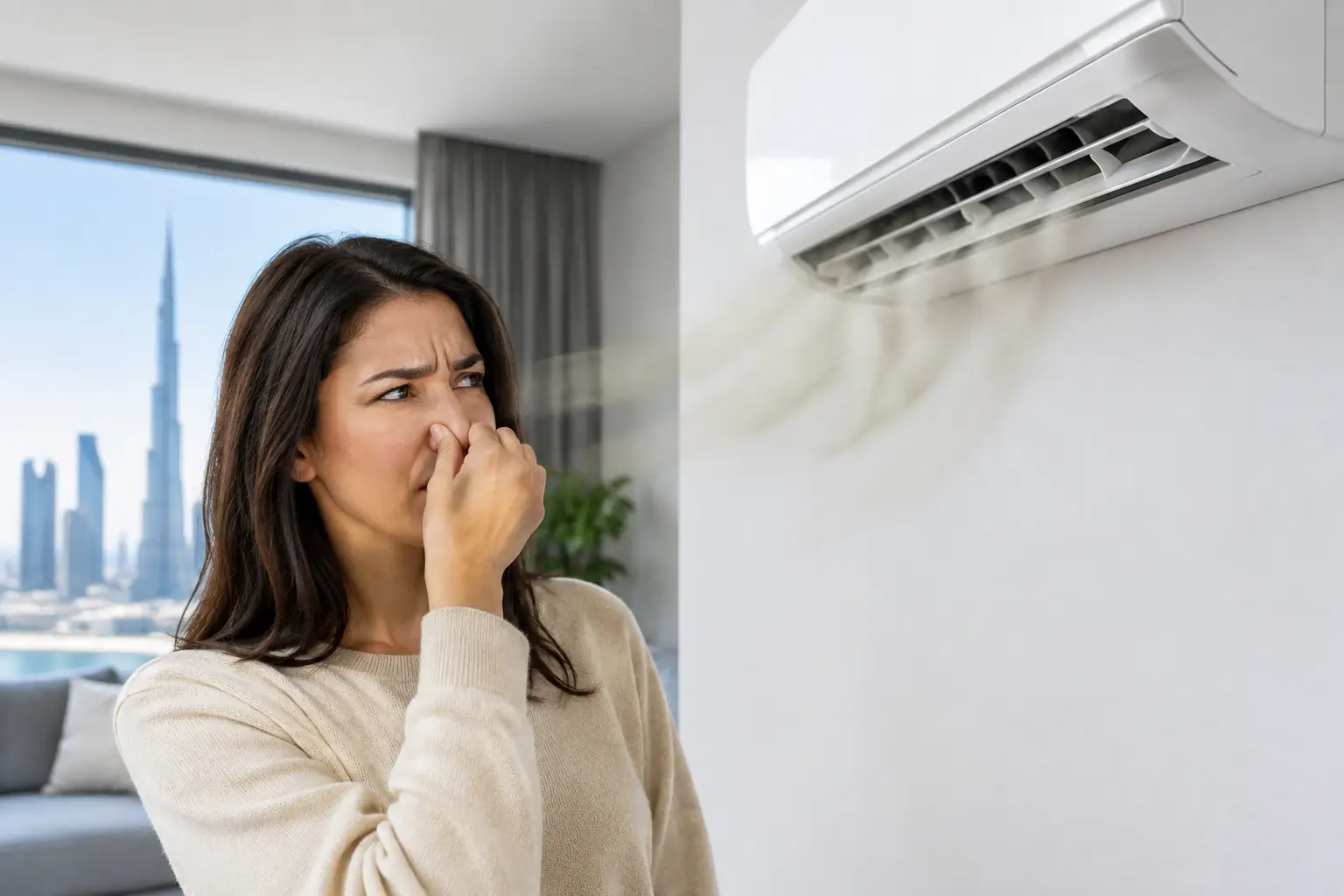
A sour, musty odor from the AC is easy to ignore for a day or two. In Dubai’s heat, though, your system may run for most of the day, continuously moving that odor through bedrooms, living areas, and offices. If you are asking, why does AC smell, the answer is usually moisture, dust buildup, drainage trouble, or an electrical issue that needs prompt attention.
The smell itself is a useful clue. Some odors are unpleasant but routine to correct with proper cleaning. Others, especially burning or chemical smells, should be treated as a safety concern. Knowing the difference helps you protect your comfort, indoor air quality, and AC equipment before a small maintenance issue becomes an expensive repair.
Why Does AC Smell in Dubai Homes and Offices?
Dubai AC systems work hard against high outdoor temperatures, humidity, fine dust, and frequent temperature changes between outdoor heat and cooled indoor spaces. This puts extra pressure on filters, coils, drain lines, and ductwork. When any of these areas collect moisture or debris, odors can develop and return every time the AC starts.
In apartments and villas, the source may be inside the indoor fan coil unit. In larger properties and offices, it could also be in concealed ductwork, multiple fan coil units, or a shared drainage arrangement. A technician should inspect the full air path rather than masking the odor with fragrance or a quick surface wipe.
Musty or damp smells
A musty smell is the most common complaint. It usually means mold, mildew, or bacteria are growing where moisture has remained in the unit. Dirty evaporator coils, wet drain pans, blocked condensate lines, and damp filters are common causes.
The AC does not need to look visibly dirty for this to happen. Microbial growth can form behind covers, on coil fins, or inside the drain pan where it is difficult to see. The smell may be strongest when the unit first turns on, then fade as the room cools. That does not mean the issue is gone. It often means airflow is dispersing the odor.
A thorough AC service should include coil cleaning, drain pan treatment, drain-line clearing, filter inspection, and a check that water is flowing away correctly. If the smell remains after the indoor unit has been serviced, duct cleaning or a closer inspection of insulation and concealed drainage may be needed.
Dirty sock odor
Some ACs produce a sharp, stale smell that people describe as dirty socks or sweaty laundry. This is often linked to bacteria on the evaporator coil. When the coil repeatedly becomes cold and wet during operation, then warms up after shutdown, it creates conditions that allow odor-causing organisms to grow.
Changing the thermostat setting will not solve this. The coil must be accessed and cleaned correctly. Replacing or washing the filter alone can improve airflow, but it will not remove buildup that is already attached to the coil or inside the drain area.
Rotten egg or sewage smells
A rotten egg, sewer-like, or stagnant-water smell may be related to a dry drain trap, a blocked condensate line, or a plumbing odor entering through a nearby drain connection. In some cases, the AC is not the original source, but it is spreading the smell as it circulates air.
This needs a careful diagnosis because AC drainage and plumbing drainage are separate systems, yet their routes may be close together in apartment buildings and commercial spaces. A technician can check the condensate drain, pan, and connected drainage points while ruling out plumbing issues. If the odor appears only in one bathroom, kitchen area, or zone, that detail can help identify the source faster.
Burning, smoky, or electrical smells
Turn off the AC and arrange professional inspection if you smell burning plastic, hot wiring, smoke, or a persistent metallic burning odor. These smells can indicate an overheating motor, damaged wire, failing capacitor, electrical connection problem, or debris near a component.
A brief dusty smell after an AC has not been used for a long period can be harmless, particularly when the system is switched on after mild weather. But a smell that continues beyond a few minutes, gets stronger, or is accompanied by unusual noise, weak cooling, tripped breakers, or visible smoke is not a wait-and-see issue. Do not keep restarting the unit to test it.
Chemical or sweet smells
A chemical smell can have several causes. Cleaning products, paint, pest-control treatments, or household chemicals may be pulled into the return air path. Less commonly, the odor may be associated with a refrigerant leak or an overheating component.
Refrigerant itself does not always have a strong, recognizable smell, so odor alone cannot confirm a leak. Watch for other signs: reduced cooling, ice on copper lines or coils, hissing sounds, longer run times, or an unexplained increase in electricity use. Refrigerant work requires trained AC technicians with the right tools. It is not a DIY repair.
What You Can Safely Check Before Booking Service
You can make a few simple checks without opening electrical panels or dismantling the indoor unit. Start by noticing when the smell occurs. Does it begin immediately at startup, only when cooling is active, or only in one room? Is it worse after the AC has been off overnight? These observations help separate a filter issue from a drainage, coil, duct, or electrical problem.
Check the air filter if it is designed for user access. A filter packed with gray dust restricts airflow and can hold odor-causing particles. Clean or replace it according to the unit manufacturer’s instructions, then allow it to dry completely before reinstalling it. A damp filter should never be put back into the system.
Also look for water dripping from the indoor unit, staining near the AC grille, or a noticeably weak air stream. These signs can point to a blocked drain line, dirty coil, or blower issue. For central systems, do not spray fragrance, disinfectant, or water into supply vents. These products may cover the smell temporarily while adding residue to the system.
When AC Odors Need Urgent Attention
Not every odor requires emergency service, but some should be addressed immediately. Switch the system off and seek qualified help if you notice a burning smell, smoke, sparking, repeated breaker trips, a strong chemical odor, or water leaking near electrical components.
A persistent musty smell also deserves timely service, particularly where children, older adults, guests, or employees spend long hours indoors. Mold-related odors can make a room feel uncomfortable and may aggravate sensitivities for some people. The goal is not simply to remove the smell. It is to remove the moisture and buildup that created it.
For landlords and office managers, document which unit or room is affected and when the issue started. This makes it easier to coordinate access, protect tenants or staff, and prevent a recurring complaint from becoming a larger maintenance disruption.
How Professional AC Cleaning Stops Odors From Returning
Effective odor control goes beyond a quick filter rinse. A proper service checks the condition of the evaporator coil, blower section, drain pan, condensate line, filters, electrical parts, insulation, and visible duct connections. The required work depends on the odor and system type.
For example, a blocked drain line may be resolved with cleaning and flushing, while recurring moldy odors may require deeper coil and blower cleaning. If dust, construction debris, or long-term buildup is present in ductwork, duct cleaning may be appropriate. It depends on the inspection findings, not on a one-size-fits-all package.
Home Mighty Fixers provides practical AC servicing, repair, and duct-cleaning support for Dubai homes and workplaces, with skilled technicians who can identify the source before recommending the right repair or cleaning work. Clear findings and timely action matter more than temporary odor sprays.
Keep the Air Fresh Between Services
In Dubai, preventive maintenance is usually less disruptive and more affordable than waiting for a smell, leak, or cooling failure. Clean or replace accessible filters regularly, keep supply and return vents clear of furniture, and do not ignore minor water drips or changes in airflow. If your AC runs heavily throughout the year, scheduled servicing is especially useful for keeping coils and drains clean.
A fresh-smelling AC should be the normal standard in your home or workplace. If an odor keeps returning, treat it as your system asking for attention, not as something you need to live with.
Leave a Reply