

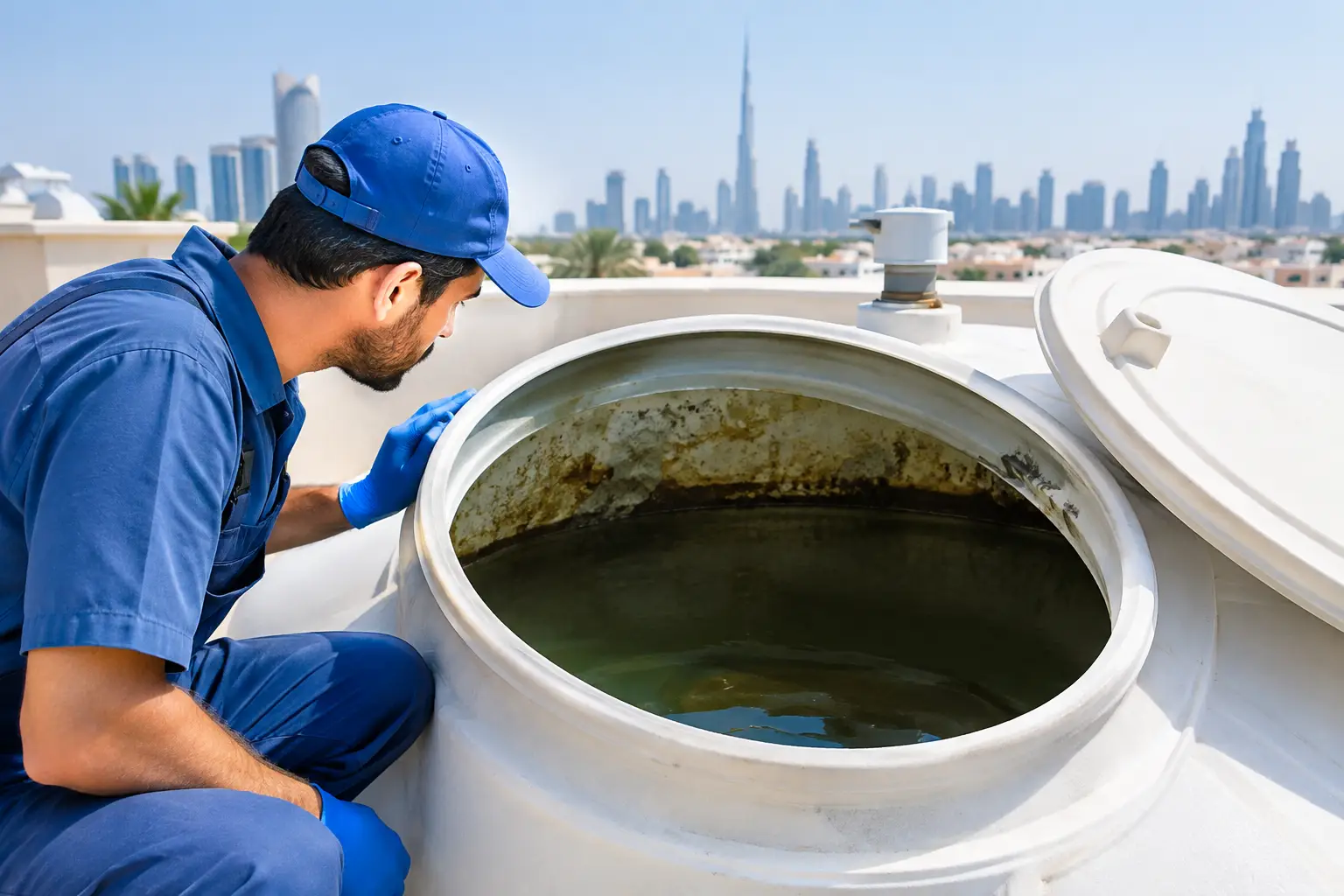
A glass of water can look perfectly clear while the storage tank above your ceiling, behind a utility room, or on your roof is collecting sediment, biofilm, and unwanted debris. In Dubai properties, water tank contamination is often missed because the tank is out of sight and water pressure may still appear normal. Waiting for an obvious odor, discoloration, or resident complaint can mean the issue has already progressed.
For villa owners, tenants, landlords, and office managers, the practical goal is simple: keep stored water clean, protect the people using it, and avoid disruption from preventable plumbing and hygiene problems. A planned inspection and professional cleaning service are usually far easier to manage than an urgent response after water quality becomes a concern.
What Water Tank Contamination Can Look Like
Contamination does not always mean the water will immediately look dirty. Dust, sand, rust particles, sediment, algae, bacteria, and organic debris can accumulate gradually inside a tank. Over time, they may form a film on internal surfaces or settle at the bottom, where they are not visible from outside.
In Dubai, rooftop tanks are exposed to heat, airborne dust, and changing weather conditions. Underground tanks can also collect sediment or be affected by damaged covers, poor seals, stagnant water, or issues in connected pipework. A tank that has not been inspected for a long period may have buildup even when the property itself appears clean and well maintained.
The risk varies by building type and water use. A family villa with a frequently used tank, a vacant rental unit with low water turnover, and a busy office with multiple washrooms do not face the same conditions. That is why cleaning schedules should reflect the tank’s location, capacity, condition, occupancy, and usage pattern rather than relying on a one-size-fits-all approach.
Warning Signs You Should Not Ignore
A change in water quality deserves attention, but it is not the only reason to inspect a tank. Watch for recurring sediment in taps, unusual taste or smell, water that appears cloudy or discolored, and stains forming around fixtures. Reduced flow can also point to sediment affecting filters, aerators, or sections of pipework.
Other signs are less direct. Residents may report skin irritation after bathing, or an office may experience repeated blockage in faucet filters. Visible dirt around a tank lid, a loose access cover, cracks in the structure, or evidence of insects and pests near the tank are all warning signs. These issues do not confirm the exact source of contamination, but they justify a professional inspection.
Do not assume the problem is limited to one faucet. If contamination is present in the storage tank, it can affect multiple outlets supplied by that tank. On the other hand, a problem at one outlet may be caused by a local fixture or pipe issue. Proper assessment prevents unnecessary work and helps identify the correct solution.
Common Causes of Water Tank Contamination in Dubai
The most common cause is simple neglect. Water tanks need periodic attention, yet they are easily overlooked when AC servicing, plumbing leaks, electrical repairs, and daily property demands take priority. Sediment naturally settles over time, especially where water storage and turnover conditions allow it to build up.
Poorly sealed lids and damaged access points create another route for contamination. Dust, insects, leaves, and other debris can enter a rooftop tank through gaps that may be hard to notice from ground level. A cracked tank, corroded fitting, or damaged internal coating can also create areas where dirt collects and cleaning becomes less effective.
Stagnant water is another concern. This can occur in vacant properties, holiday homes, unused sections of a building, or tanks that are oversized for actual demand. Low circulation does not automatically mean water is unsafe, but it can increase the need for inspection and appropriate maintenance.
Finally, cleaning carried out without the right procedure can leave the underlying problem unresolved. Simply draining a tank or rinsing its interior may remove some loose dirt while leaving residue on walls, corners, and fittings. Professional cleaning should address sediment removal, internal surface cleaning, disinfection where required, safe flushing, and a check of the tank’s cover, condition, and connections.
Why Quick DIY Cleaning Can Create More Problems
Property owners often consider opening the tank and handling the job themselves. For a small, accessible tank, basic visual checks may be reasonable when done safely. However, full cleaning and disinfection involve more than using a hose and household chemicals.
Incorrect chemical dosing can create a new water-quality issue. Incomplete flushing can leave residues behind, while entering or working around confined tank spaces can introduce safety risks. There is also the practical problem of identifying whether the tank is the true source of the issue or whether plumbing, fixtures, filters, or incoming supply conditions need attention instead.
A qualified service team can follow an organized process and work with the property’s water system in mind. This is particularly valuable for landlords and facilities managers who need clear records, reliable scheduling, and minimal disruption for tenants or staff. For properties that must follow Dubai Municipality requirements or building-management rules, professional service can also help support a more controlled maintenance approach.
A Safer Cleaning and Disinfection Process
The exact method depends on the tank type, size, location, and condition. Still, a proper service generally begins by assessing access, isolation points, and the condition of the lid, walls, base, and fittings. The team should plan the work to avoid unnecessary water loss and protect nearby areas.
After the tank is safely isolated and drained as needed, accumulated sediment and debris are removed. Internal surfaces are cleaned carefully, including corners and areas around outlets where buildup can remain. The tank is then disinfected using an appropriate process, followed by flushing before it is returned to service.
The work should not end at the tank itself. A useful inspection includes checking covers and seals, float valves, overflow arrangements, visible connections, and any signs of cracks or leaks. If a damaged component allows dust or pests to enter, cleaning alone will only provide a temporary result.
Home Mighty Fixers approaches water tank cleaning as part of overall property hygiene, not as an isolated task. That matters because water storage, plumbing condition, and ongoing maintenance all affect how reliably a property can provide clean water to residents, visitors, or employees.
How Often Should a Water Tank Be Cleaned?
There is no single interval that suits every property. A regularly occupied villa with exposed rooftop storage may need more frequent attention than a protected indoor tank in a low-occupancy building. Local requirements, building policies, water-use patterns, tank condition, and previous inspection findings should guide the schedule.
As a practical rule, do not wait for visible contamination. Establish a regular inspection and cleaning plan, then adjust it if the tank is exposed to heavy dust, has a damaged cover, serves many occupants, or shows recurring sediment. For landlords with multiple units, adding water tank checks to an annual maintenance plan can make compliance, budgeting, and tenant communication easier.
Preventing Contamination Between Services
Good prevention is mostly about protecting the tank and noticing small defects early. Keep the lid secure, make sure access points are properly sealed, and arrange repairs if there are cracks, corroded parts, or leaks. Check that overflow openings and surrounding areas are not creating an entry point for pests or debris.
It also helps to pay attention to changes inside the property. Repeatedly clogged faucet aerators, strange odors, or inconsistent water appearance should be investigated rather than treated as minor inconveniences. If the tank has recently been cleaned and the same issue returns quickly, the cause may be in the tank structure, connected plumbing, or a filtration component.
For offices and rental properties, document service dates and inspection findings. This gives property managers a clearer maintenance history and helps them respond confidently if occupants raise a water-quality concern. It also prevents essential hygiene work from being forgotten during busy turnover periods or renovation projects.
Clean water storage is not something residents should have to think about every day. With a secure tank, sensible inspection schedule, and qualified cleaning when needed, it can remain one less property concern on your list.
Leave a Reply