

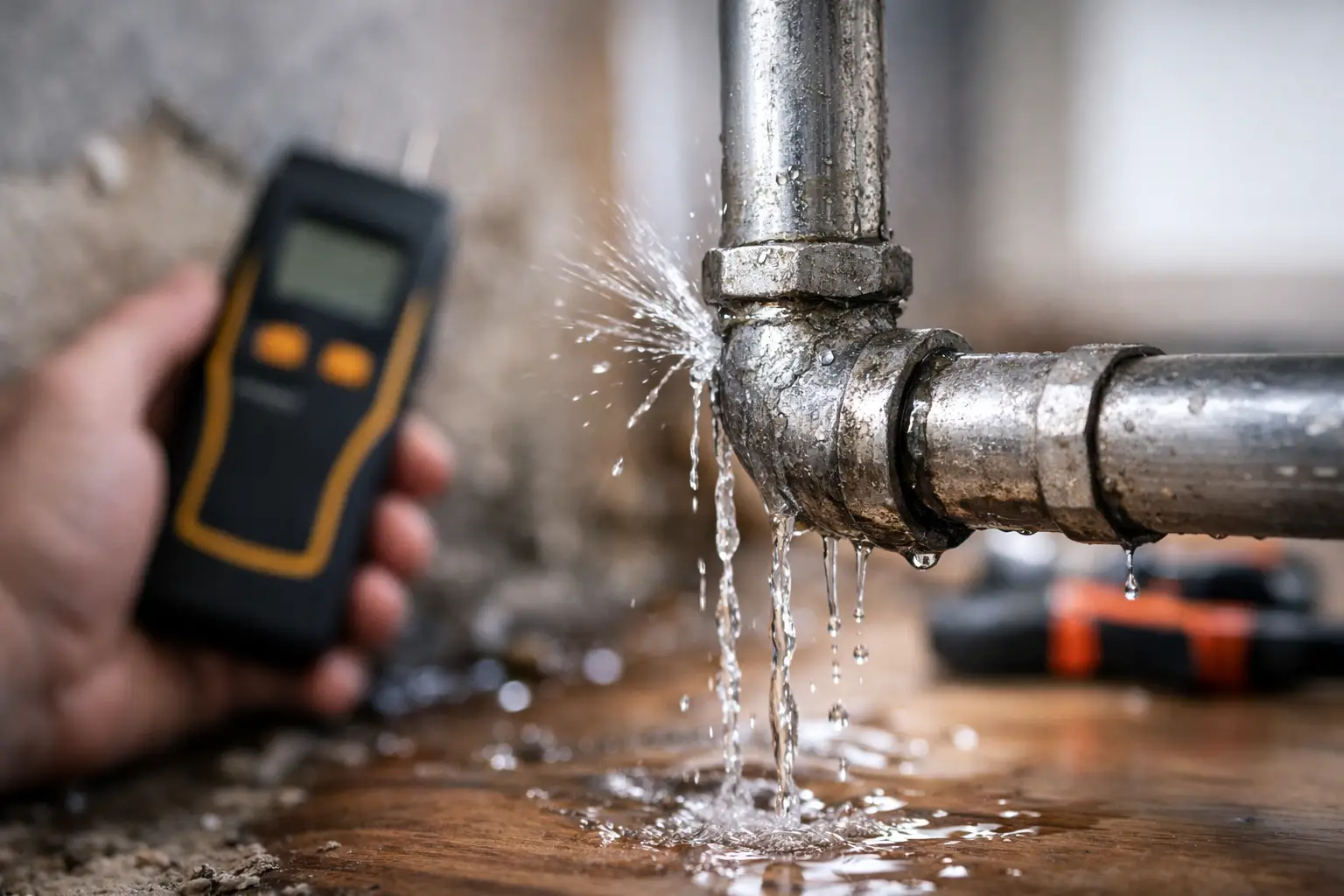
A water bill that rises without explanation, a damp patch below an AC drain line, or paint beginning to bubble near a bathroom wall can point to the same problem: water is escaping where it should not. Effective pipe leak detection finds that escape early, before a minor plumbing fault becomes damaged ceilings, mold growth, disrupted tenants, or an expensive restoration job.
In Dubai, leaks can be especially easy to miss. Pipes often run behind tiled walls, above false ceilings, beneath kitchen cabinets, and through service shafts. Constant AC use, busy households, hard water, and vacant rental units can all make a small issue harder to spot until visible damage appears.
Why Pipe Leak Detection Should Not Wait
A leaking pipe does more than waste water. Even a slow drip can saturate gypsum board, weaken cabinet panels, stain ceiling finishes, and create conditions that encourage mold and unpleasant odors. In apartments, the leak may also travel into the unit below, creating a shared repair issue that is more complicated than the original plumbing fault.
For villa owners, hidden leaks can affect external walls, garden irrigation connections, water heaters, and underground supply lines. For landlords and office managers, an undetected leak can mean complaints, downtime, damaged finishes, and avoidable disputes over responsibility.
The earlier the source is identified, the more focused the repair can be. A technician may be able to replace a worn valve, tighten a connection, repair a short pipe section, or clear a drainage obstruction before water reaches finishes and furnishings. Waiting for a ceiling stain or a flooded cabinet usually means the leak has already had time to spread.
Signs You May Have a Hidden Pipe Leak
Not every plumbing leak creates a visible puddle. Watch for changes that do not have an obvious explanation, particularly when they continue after cleaning or routine maintenance. Common warning signs include:
- A water bill that is higher than normal despite similar household use
- A water meter that continues moving when all taps and water-using appliances are off
- Musty smells in bathrooms, kitchens, closets, or near AC service areas
- Damp, discolored, cracked, or bubbling paint on walls and ceilings
- Soft floor areas, loose tiles, warped cabinets, or recurring mold around a fixture
- Reduced water pressure, unexplained sounds of water movement, or a water heater that cycles unusually often
One sign does not always confirm a pipe leak. Condensation from AC ductwork, a blocked drain, failed waterproofing, a leaking appliance hose, or humidity can produce similar symptoms. That is why diagnosis matters. Repairing the wrong area may temporarily hide the damage while the actual water source continues.
A Simple Meter Check at Home
If it is safe to do so, turn off taps, washing machines, dishwashers, irrigation, and other water-using equipment. Check the water meter, wait 30 to 60 minutes without using water, then check it again. If the reading changes, there may be a leak on the property.
This is a useful first check, not a complete diagnosis. Some properties have tanks, booster pumps, shared systems, or concealed equipment that can affect readings. A professional inspection is still the right next step when there are signs of water damage or continuing water loss.
How Professional Pipe Leak Detection Works
Professional pipe leak detection is about locating the source with as little unnecessary opening work as possible. The method depends on the building layout, pipe material, symptoms, and whether the suspected leak is on a pressurized water line, drainage pipe, AC condensate line, or external connection.
A skilled plumber starts with a practical inspection. They ask where the damage appeared, when it started, whether it gets worse after using a shower or appliance, and whether water pressure or bills have changed. They inspect accessible valves, fixtures, flexible hoses, water heaters, under-sink connections, toilet fittings, and exposed pipework before considering more specialized testing.
Pressure testing can help confirm whether a supply line is losing water. Thermal imaging may reveal temperature differences caused by moisture or a hot-water leak behind a surface. Moisture meters can identify elevated moisture in walls, floors, or ceilings and help define how far water has traveled. Acoustic equipment may assist in locating the sound of pressurized water escaping inside a concealed line.
For drainage problems, a camera inspection can be useful where access and pipe size allow it. This is particularly helpful when repeated blockages, odors, or leaking joints suggest a cracked or displaced drain pipe. In some cases, controlled testing of one fixture at a time is the clearest way to isolate the affected bathroom, kitchen, balcony drain, or AC condensate route.
No single tool is right for every leak. Thermal imaging can indicate moisture patterns, but it does not automatically identify the exact failed fitting. Acoustic testing works best under suitable pressure and may be less useful around heavy building noise. A dependable diagnosis combines equipment results with plumbing knowledge and a careful inspection of the property.
What Happens After the Leak Is Found
Once the likely source is confirmed, the priority is to stop the water safely. This may mean isolating a fixture, closing a local valve, shutting off the main supply, or temporarily taking an appliance out of use. If water is close to electrical outlets, lighting, or a distribution board, avoid touching affected electrical components and arrange urgent professional help.
The repair approach should match the actual failure. A deteriorated flexible hose may need replacement, while a corroded concealed pipe section may require controlled access through a wall or ceiling. A leaking toilet flush valve, a failed water-heater relief connection, and a cracked drain line are different faults with different repair requirements.
Ask for a clear explanation of the suspected cause, the area that needs to be opened if access is required, and what testing will be completed after the repair. A proper repair should include checking that pressure is stable, confirming there is no continuing water escape, and advising on drying or restoration where moisture has affected finishes.
It can be tempting to seal a stain, apply surface silicone, or replace a damaged ceiling panel immediately. Cosmetic work should wait until the water source is resolved and the affected area has dried adequately. Otherwise, stains, odor, or mold can return behind a fresh finish.
Preventing Repeat Plumbing Leaks
Some plumbing failures are unpredictable, but routine attention reduces risk. Check under sinks and around toilets periodically, especially in rental properties between tenants. Replace aging appliance hoses and worn flexible connections before they fail. Keep AC drain lines maintained, because condensation leaks are often mistaken for broken water pipes.
Water heaters deserve regular inspection as well. Look for moisture around connections, corrosion, unusual noises, or inconsistent hot water. In villas, inspect outdoor taps, irrigation connections, and exposed external pipework, particularly after landscaping work or changes to the garden area.
For landlords, property managers, and busy families, scheduled maintenance is often easier than reacting to each problem separately. A planned inspection can cover plumbing alongside AC, electrical, and general upkeep, helping identify small faults while access is straightforward. Home Mighty Fixers can coordinate these essential services through one accountable maintenance team, including urgent support when a leak cannot wait.
When to Treat a Leak as an Emergency
Act quickly if water is flowing from a ceiling, spreading near electrical equipment, entering multiple rooms, or coming from a burst pipe. Shut off the nearest safe isolation valve or the main water supply if you know where it is, move valuables away from the area, and avoid using affected fixtures until a technician has assessed the problem.
For a slower leak, prompt action is still worthwhile. Take photos of visible damage, note when it appears, and avoid repeatedly using the fixture that seems connected to the issue. These details can help the technician narrow down the cause and reduce unnecessary exploratory work.
A small damp mark is not something to watch for weeks. Treat it as useful early evidence. Finding the source while the repair is still contained protects your property, your budget, and the comfort of everyone who uses the space.
Leave a Reply