

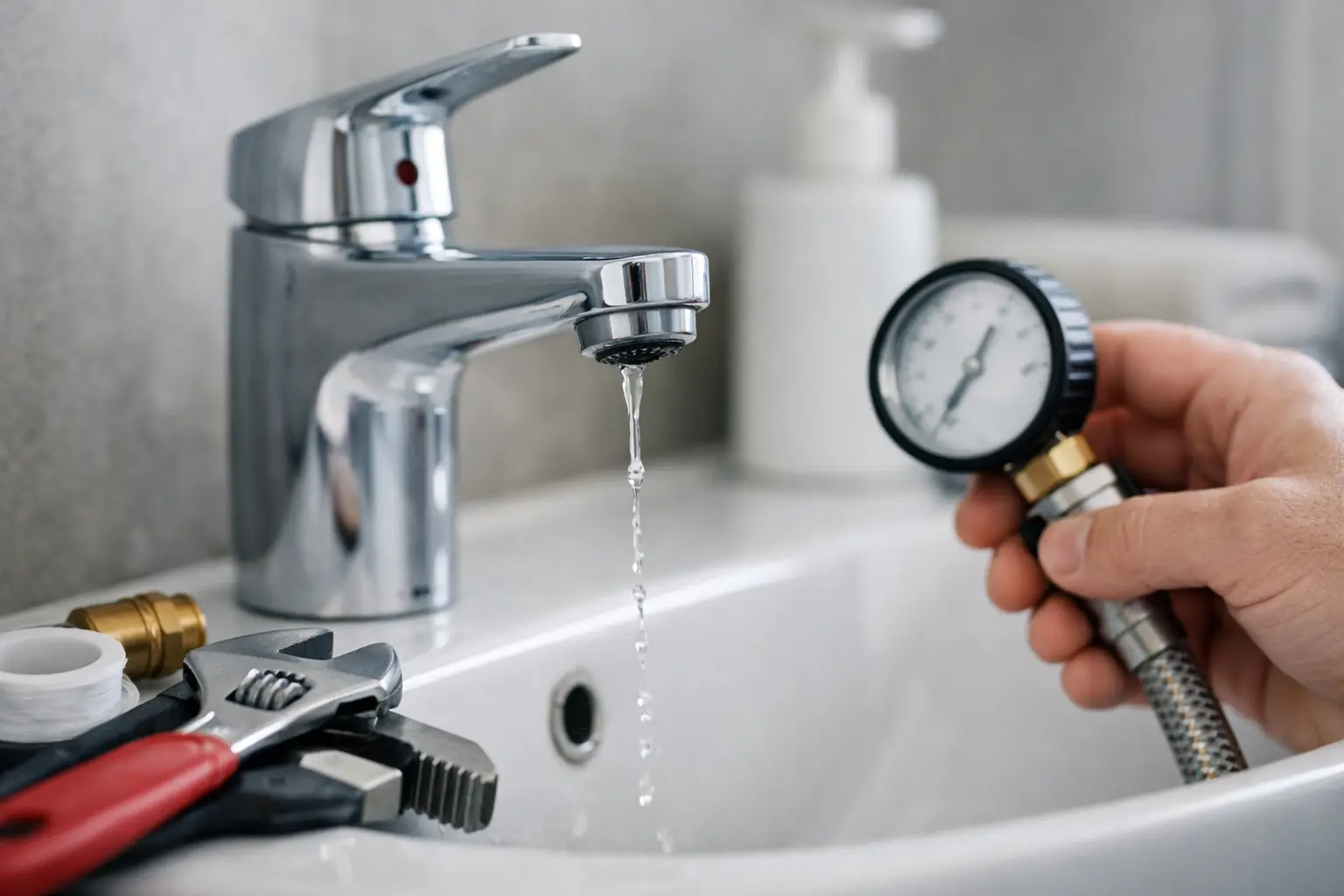
A shower that turns into a trickle, a washing machine that takes longer to fill, or a kitchen faucet with barely enough flow to rinse dishes can quickly disrupt a normal day. Low water pressure is more than a comfort issue in a Dubai home or office. It can point to a blocked fixture, a hidden plumbing leak, a valve problem, or an issue affecting the building water supply.
The right solution depends on where the pressure loss occurs and how suddenly it started. A simple clogged faucet aerator may take minutes to resolve. A widespread drop in pressure, on the other hand, deserves prompt professional attention to protect your property, water supply, and daily routine.
First, Tell Pressure From Water Flow
People often use pressure and flow to mean the same thing, but the distinction helps identify the problem. Water pressure is the force pushing water through the pipework. Flow is the amount of water that actually reaches the faucet, showerhead, or appliance.
For example, a showerhead may have normal pressure behind it but weak flow because mineral deposits or sediment are blocking its small openings. If water is weak at every fixture, the issue is more likely to be a supply, pump, main valve, or plumbing system concern.
A useful first check is to compare fixtures. Turn on the cold water at a kitchen faucet, bathroom sink, shower, and an outdoor tap if available. Then repeat the test with hot water. Note whether the issue affects one outlet, one area, only hot water, or the entire property. This gives a technician a much clearer starting point.
Common Causes of Low Water Pressure
A clogged aerator or showerhead
This is one of the most common and least serious causes. Faucet aerators and showerheads have small screens and nozzles that can collect sediment, scale, and debris over time. The result is weak or uneven water flow at a single fixture while the rest of the property works normally.
If you are comfortable doing so, carefully remove the aerator or showerhead and rinse away visible debris. A proper cleaning solution can help loosen mineral buildup. Do not force delicate parts or use sharp objects that may damage the screen. If the fixture is old, corroded, or still restricted after cleaning, replacement may be the better value.
Partially closed isolation or main valves
Valves control water entering a property and feeding individual fixtures. After plumbing work, water tank cleaning, or a previous repair, a valve may not have been fully reopened. A partially closed valve can reduce pressure across one bathroom, one kitchen line, or the whole unit.
Avoid turning valves repeatedly if you are unsure which one controls what. Older valves can stick, leak, or fail when disturbed. A qualified plumber can inspect the valve position and condition, then confirm that the water line is operating correctly.
Leaks in concealed plumbing
A hidden leak does not always create an obvious puddle. Water can escape behind walls, under flooring, above ceilings, or in external pipework, reducing the supply available at fixtures. In villas, leaks in garden lines or irrigation connections can also affect water use and pressure.
Watch for unusually high water bills, damp patches, peeling paint, musty smells, sound of running water when taps are off, or a water meter that continues moving with no water in use. These signs require a timely inspection. Waiting can lead to structural damage, mold growth, and a much larger repair bill.
Water heater or hot-water line issues
When cold water is strong but hot water is weak, the problem is usually not the main incoming supply. Sediment buildup in the water heater, a restricted hot-water valve, scaled pipework, or a faulty mixer cartridge may be responsible.
This is especially common where hard water leaves mineral deposits inside equipment and fixtures. Water heater work should be handled carefully because it involves pressurized water, electrical components, and high temperatures. A technician can isolate the issue without putting the appliance or occupants at risk.
Tank, pump, or building supply problems
Many Dubai properties rely on water tanks, booster pumps, and building distribution systems. Low pressure may appear at certain times of day when demand is higher, after a pump malfunction, or when there is an issue with a shared building supply. Apartment residents may find that neighbors are experiencing the same problem, while villa owners may notice pressure changes linked to their own pump or tank system.
If multiple homes or offices in the building are affected, notify building management first. If the problem is limited to your unit or villa, arrange a plumbing inspection. Pump settings, electrical faults, pressure vessels, blocked filters, and tank-related issues need a proper diagnosis rather than guesswork.
Aging or corroded pipework
In older properties, internal corrosion, scale, and sediment can gradually narrow the inside of pipes. The pressure decline may be slow enough that residents only notice it after installing a new showerhead or moving from another property with stronger water flow.
Localized pipe replacement may be enough if the restriction is confined to one section. Where pipework is extensively deteriorated, a larger upgrade can be more cost-effective over time. The trade-off is that replacement work can involve access panels, wall repairs, or temporary disruption, so an honest assessment of the pipe condition matters.
Safe Checks Before Calling for Help
Start with the simplest observations, without dismantling plumbing or adjusting equipment. Ask whether the issue began suddenly or gradually, whether it affects hot and cold water, and whether neighboring units have the same complaint.
Check that the water meter area and any visibly accessible valves have not been accidentally disturbed. Look under sinks and around toilets for signs of leakage. Clean a visibly blocked aerator only if you can remove and reinstall it safely. If the pressure returns after that, the issue was likely isolated to the fixture.
Do not tamper with pressure regulators, booster pumps, water heater connections, or electrical controls. Increasing pressure without identifying the cause can damage fixtures, worsen leaks, and put strain on pipes. A strong shower is not worth a burst connection behind a wall.
When Low Water Pressure Needs Urgent Attention
Arrange professional support quickly if the pressure drops suddenly throughout the property, water stops completely, you see active leaking, or you notice damp ceilings and walls. These symptoms may indicate a failed pipe, major valve issue, pump failure, or supply interruption.
For commercial properties, weak water flow can affect washrooms, cleaning routines, staff comfort, and customer experience. Landlords should also act promptly when tenants report pressure concerns, especially where the issue may affect water heaters, bathrooms, or multiple units. Addressing the cause early helps prevent complaints from becoming property damage.
A skilled plumber should test the supply, inspect valves and fixtures, check for leaks, and assess the relevant tank or pump system where applicable. Home Mighty Fixers can coordinate this work as part of a wider property maintenance plan, which is useful for busy residents, landlords, and office managers who prefer one accountable team.
Preventing Future Pressure Problems
Regular plumbing maintenance reduces the chance of unexpected disruptions. Keep showerheads and aerators clean, repair small leaks before they spread, and schedule periodic checks of visible valves, flexible hoses, water heaters, tanks, and pumps. Properties with recurring hard-water buildup may also benefit from more frequent fixture cleaning and professional inspections.
For villas, rental portfolios, and offices, planned maintenance is often more practical than waiting for an emergency. A routine visit can identify worn seals, deteriorating connections, slow leaks, and early pump concerns before water pressure becomes a daily frustration.
If your water flow has changed, treat it as useful information from your property. A quick comparison between fixtures and a timely expert inspection can restore comfort while helping protect the plumbing system behind the walls.
Leave a Reply