

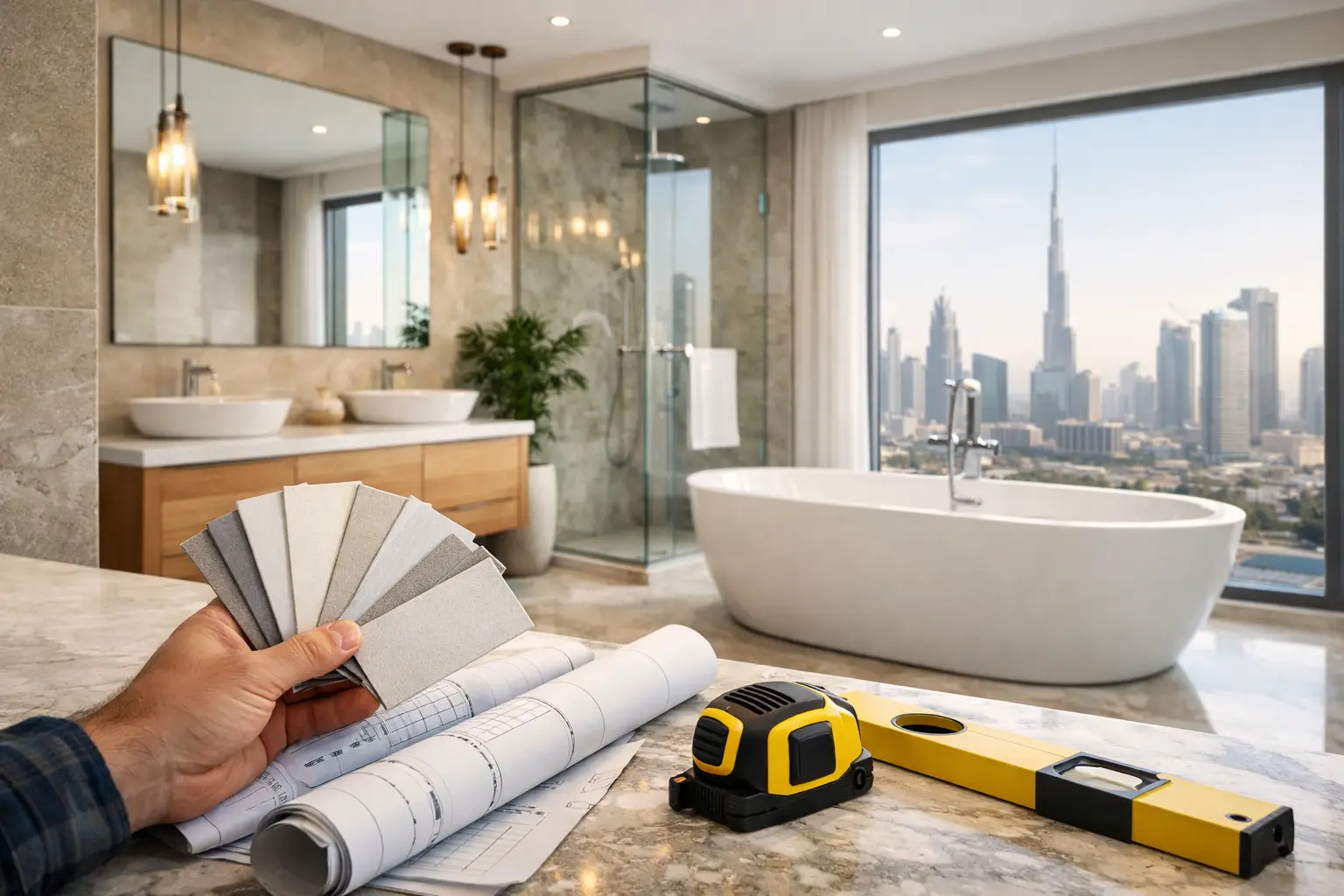
A bathroom can look acceptable at first glance while creating daily frustration: weak water pressure, persistent grout stains, poor ventilation, inadequate storage, or a layout that makes a busy morning harder than it needs to be. For homeowners, tenants with landlord approval, and property investors, bathroom renovation services Dubai residents choose should solve those practical problems as well as improve the appearance of the room.
A successful renovation is not just about selecting attractive tiles and fixtures. It requires careful planning around plumbing locations, waterproofing, electrical safety, ventilation, material durability, and the way your household actually uses the space. In Dubai, where heat, humidity, hard water, and frequent AC use affect property conditions, those details deserve professional attention.
What Bathroom Renovation Services in Dubai Should Cover
A complete bathroom renovation starts with an on-site assessment. Before removing a single tile, a technician should inspect the existing plumbing, drainage performance, electrical points, ventilation, ceiling condition, and signs of moisture behind walls or beneath flooring. This reduces the risk of covering up an existing leak and discovering it after the new finishes are installed.
The scope can be as simple as replacing a vanity, toilet, shower fittings, and damaged tiles. It can also involve a full redesign with new layouts, concealed plumbing, a walk-in shower, upgraded lighting, improved storage, and a fresh ceiling. The right level depends on the bathroom’s condition, your budget, and whether the property is a long-term home, a rental unit, or a commercial space.
Reliable bathroom renovation work generally includes demolition and safe debris removal, plumbing adjustments, electrical work, waterproofing, tiling, fixture installation, painting, silicone sealing, and final testing. When one provider coordinates these trades, the project is easier to manage and there is clearer accountability if an issue needs attention.
Start With How the Bathroom Needs to Work
The most impressive bathroom design is still a poor investment if it does not suit daily routines. A family bathroom may need durable finishes, easy-clean surfaces, and storage for towels and toiletries. A master bathroom may benefit from a larger shower area, better lighting at the mirror, and a vanity with more counter space. For a rental property, hard-wearing materials and simple access for future maintenance often make more sense than highly specialized fittings.
Think about the practical details before approving a design. Is the shower screen wide enough to reduce splashing? Will the vanity drawers open comfortably? Is there enough light for shaving or makeup? Where will cleaning products go? Can an older resident step safely into the shower?
Changing the layout can add comfort and value, but it may also increase cost and project time. Moving a toilet, floor drain, or shower position usually requires more plumbing work than replacing fixtures in the same locations. Keeping major plumbing points where they are can be a sensible choice when the existing layout works reasonably well.
Choose Materials for Dubai Conditions
Bathrooms experience constant moisture, and Dubai properties may also deal with mineral buildup from water. Choose wall and floor finishes that are durable, easy to clean, and suitable for wet areas. Porcelain tiles are a popular option because they are dense, low-maintenance, and available in many styles. For shower floors, slip resistance matters as much as appearance.
Grout selection also deserves attention. Light grout can make a bathroom feel brighter, but it may show discoloration faster. Darker grout can be easier to maintain, although it may make a small room feel more enclosed. Good-quality sealing and careful installation are essential whichever finish you select.
Fixtures should balance style with serviceability. A distinctive imported faucet may look appealing, but finding replacement cartridges or parts later can be difficult. Established fixture types with locally available spare parts are often the more practical choice for landlords and busy households.
Waterproofing Is Not an Area to Compromise
Waterproofing is the part of a bathroom renovation that homeowners rarely see after completion, yet it is one of the most important stages. Tile and grout are not fully waterproof on their own. Water can pass through weak joints, unsealed corners, damaged grout, or poorly finished pipe openings and reach the structure beneath.
A professional team prepares the substrate, applies an appropriate waterproofing system in wet zones, treats corners and pipe penetrations carefully, and checks drainage falls before the final tile installation. The shower area must direct water toward the drain rather than allowing it to pool at the edges.
Skipping these steps may save money at the start, but it can lead to mold, peeling paint, damaged ceilings in the unit below, and expensive repair work later. This is particularly important in apartment buildings, where a bathroom leak can affect neighbors and create avoidable disruption.
Plumbing, Drainage, and Ventilation Need Equal Attention
A renovated bathroom should perform better, not merely look newer. Old flexible hoses, corroded valves, slow drains, and leaking connections should be inspected during the project. Replacing worn components while walls or access panels are open is usually more efficient than arranging a separate emergency plumbing visit several months later.
Drainage should be tested before handover. Water needs to flow freely from the shower area, sink, and floor drain without backing up or spreading across the floor. If unpleasant odors are present, the team should investigate traps, drain connections, and ventilation rather than trying to mask the problem with fragrance.
Ventilation is another common weak point. Bathrooms without adequate extraction can remain damp long after a shower. That moisture encourages mildew, affects paint, and can make clean surfaces look neglected quickly. An appropriately placed exhaust fan, functioning duct route, and good air movement help protect the renovation and keep the room more comfortable.
Electrical Upgrades Should Be Planned Early
Bathroom electrical work must be carefully positioned for safety and convenience. Many older bathrooms have limited lighting, poorly placed switches, or insufficient power for a mirror light, exhaust fan, or shaver outlet. Planning electrical requirements early prevents unnecessary wall opening after tiling has begun.
Well-designed lighting usually combines general ceiling lighting with clearer task lighting around the mirror. Warm lighting can create a relaxing feel, while neutral white lighting is often more practical for grooming. The best option depends on the room’s size, natural light, and intended use.
All electrical changes should be completed by qualified professionals using suitable fittings for wet environments. This is not a place for temporary wiring or quick fixes.
Set a Clear Budget and Project Scope
Bathroom renovation costs vary because no two bathrooms have the same condition or requirements. A cosmetic update with new accessories, repainting, and selected fixture replacement will cost far less than a full renovation involving demolition, waterproofing, plumbing relocation, custom cabinetry, and premium finishes.
The most useful estimate is one that separates labor, materials, fixtures, and any optional upgrades. It should also clarify what happens if hidden issues are found, such as a damaged pipe, water-affected wall, or unsuitable electrical connection. Transparency at this stage helps avoid confusion once the work is underway.
Avoid selecting a contractor on price alone. A very low quote may exclude waterproofing, testing, quality materials, or proper finishing work. Ask what is included, who manages the trades, how the work area will be protected, and what checks are completed before handover.
A Cleaner, More Controlled Renovation Process
Bathroom work can be disruptive, especially when the property has only one bathroom. A well-managed team plans the schedule, protects nearby areas from dust, removes debris responsibly, and keeps the customer informed about each stage. Clear coordination is particularly valuable for expatriate owners, landlords managing properties remotely, and office managers with limited time to supervise contractors.
Home Mighty Fixers brings multi-trade property maintenance experience to renovation work, helping customers coordinate plumbing, electrical, handyman, and finishing requirements through one dependable point of contact. That approach is useful when a renovation reveals related maintenance needs that should be resolved properly rather than postponed.
Before final handover, inspect the bathroom with the team. Check that fixtures are secure, doors and drawers operate correctly, water flows and drains as expected, silicone lines are neat, tiles are clean, and there are no visible leaks. Keep any product information and maintenance guidance for future reference.
A bathroom renovation should give you more than a polished new room. When the planning, waterproofing, plumbing, ventilation, and finishing are handled with care, it gives your household a cleaner, safer, and more comfortable space to rely on every day.
Leave a Reply